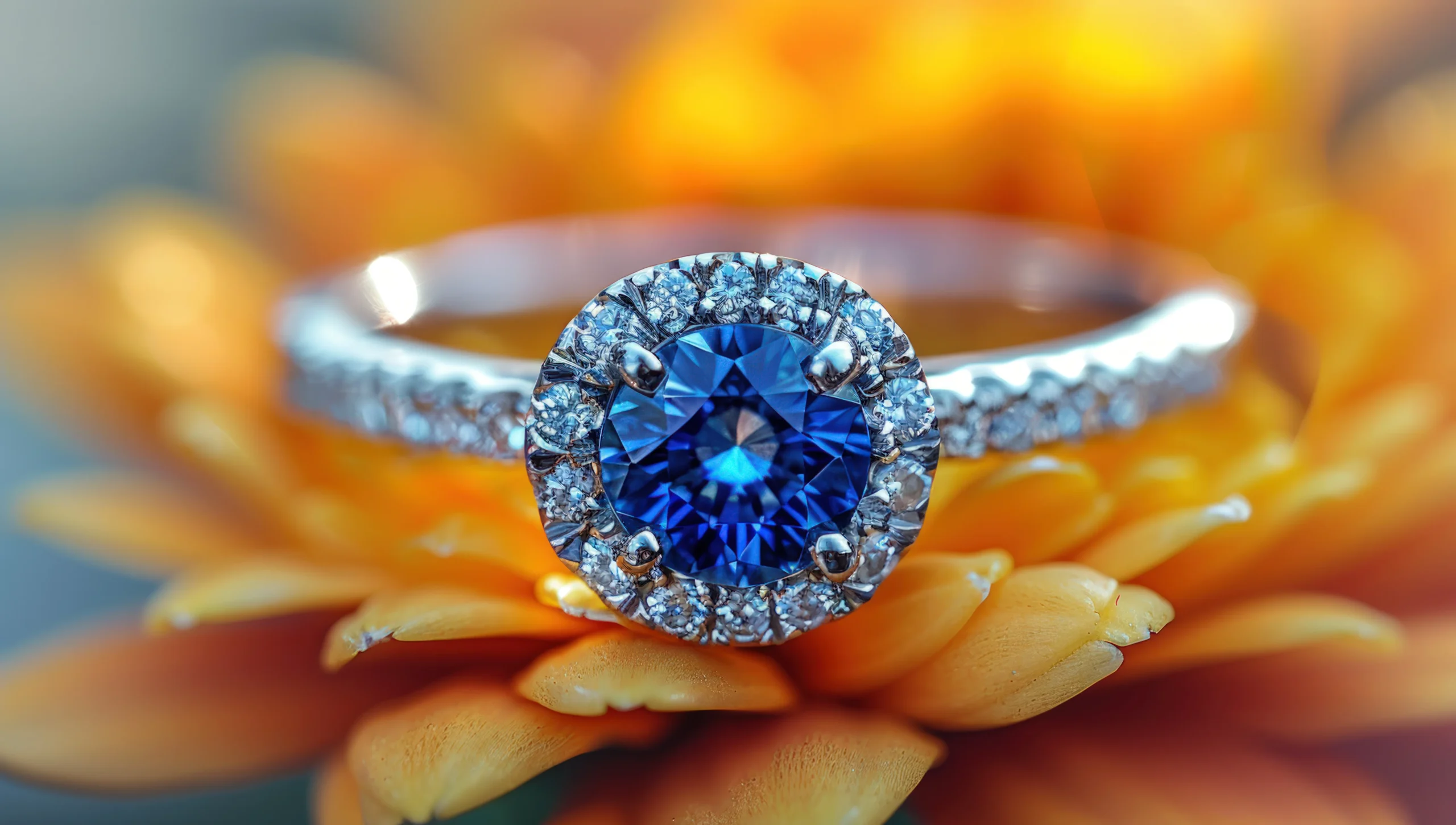
A single unheated Burmese ruby, glowing with what gem traders call “pigeon’s blood” red, sold at Sotheby’s Geneva in 2025 for over $14 million — roughly $1.8 million per carat. What made it worth more than most Manhattan apartments? Not its size. Its color. According to the American Gem Trade Association (AGTA), color accounts for 50–70% of a colored gemstone’s market value — a figure that fundamentally changes how you should shop for sapphires, rubies, and emeralds compared to how you’d shop for a diamond.
If you’re choosing a colored gemstone for an engagement ring, a meaningful gift, or a personal collection, understanding how to grade colored gemstones isn’t optional — it’s the single skill that separates a buyer who gets extraordinary value from one who overpays for something ordinary. This post walks you through every grading factor that matters: what professional gemologists examine, what the GIA and AGTA standards actually say, and what to ask when you’re standing in front of a gemstone deciding whether it deserves a place in your life.
By the time you finish reading, you’ll know exactly how color saturation, tone, hue, clarity, and cut interact to create gemstone value — and you’ll be equipped to recognize a truly exceptional stone when you see one.
What Is Gemstone Color Grading — and Why It Matters More Than Anything Else
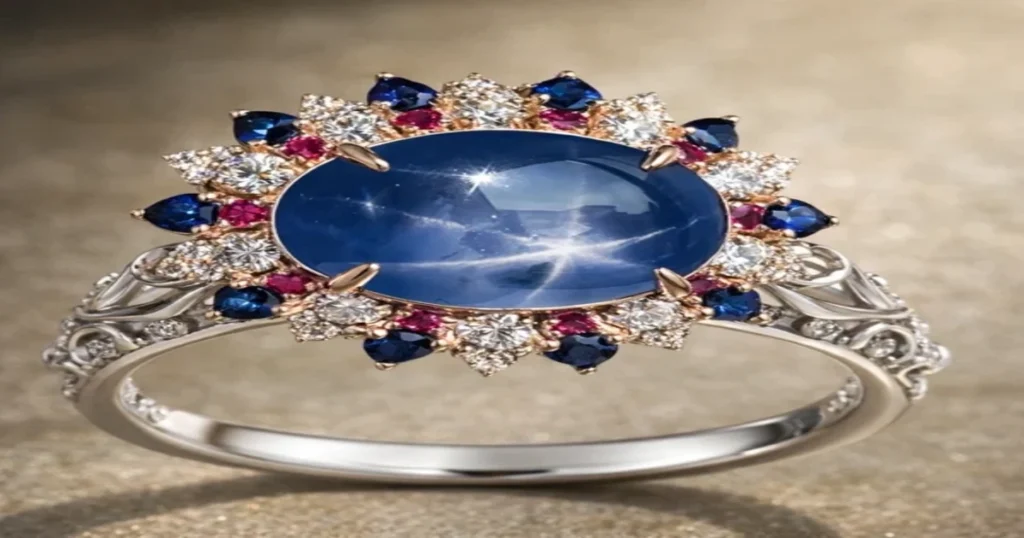
Gemstone color grading evaluates three components: hue (the gem’s base color), tone (how light or dark it appears), and saturation (the color’s richness and intensity). Together, these determine up to 70% of a colored gemstone’s value, according to AGTA standards. A vivid, well-saturated stone in the ideal tone range is exponentially more valuable than a larger gem with weak or muddy color.
When gem traders and gemologists describe a sapphire as “cornflower blue” or a ruby as “pigeon’s blood,” they’re using trade shorthand for very specific combinations of hue, tone, and saturation that represent the market’s most coveted versions of each gem. Understanding these distinctions isn’t insider jargon — it’s the foundation of buying well.
Hue: The Starting Point Hue is the gem’s principal color — blue for sapphire, red for ruby, green for emerald. But most colored gems aren’t a single pure hue. A sapphire might be blue with a violet secondary hue (often called “velvety”), or it might lean slightly green (less desirable). Ruby can trend toward orange (contributing to “padparadscha”-adjacent hues) or purple. Emerald ideally shows a slightly bluish-green; pure grass green is actually considered less valuable in the trade.
Tone: The Lightness-to-Darkness Scale Gemologists grade tone on a scale from 0 (colorless) to 100 (black). The sweet spot for most colored gems sits between 60–80 — dark enough to show rich color, light enough to retain brilliance. A ruby with a tone of 90 appears nearly black under normal lighting; one at 40 looks washed out and pink. Neither commands top dollar.
Saturation: The Deciding Factor Saturation describes how pure and vivid the color appears — free of gray or brown masking tones. The GIA describes the ideal as “vivid” saturation, and stones achieving this in combination with ideal hue and tone can command prices 3–5x higher than stones with “moderately strong” saturation in the same species.
At DiamondsNColors, our colored gemstone selection (link: /colors/) is curated around this understanding. Every sapphire, ruby, and emerald in our showroom is evaluated in natural daylight, incandescent light, and fluorescent light — because great color should hold across all conditions, not just in a jeweler’s spotlight.
How Clarity Is Graded Differently in Colored Gemstones vs. Diamonds
Unlike diamonds — where any visible inclusion can sharply reduce value — colored gemstone clarity grading operates on a gem-by-gem basis. The GIA classifies gems into three clarity types: Type I (naturally clean, like aquamarine), Type II (typically included, like sapphire and ruby), and Type III (almost always included, like emerald). A near-flawless emerald is extraordinarily rare; the same standard applied to an aquamarine is expected.
This is one of the most misunderstood areas in gemstone buying, and it costs consumers real money when they don’t know it.
Type I Gems (Eye-Clean Expected): Aquamarine, topaz, morganite, and tanzanite are almost always found without visible inclusions. When buying these, you should hold out for an eye-clean stone.
Type II Gems (Some Inclusions Normal): Sapphires and rubies routinely contain needle-like inclusions called “silk” — fine rutile crystals that can actually scatter light beautifully, creating the velvety appearance prized in Kashmir sapphires. A ruby with moderate silk is not flawed — it may be more beautiful than a perfectly clean stone under the right conditions. The Gemological Institute of America (GIA) notes that rubies are expected to contain inclusions, and a “clean” ruby should be treated with appropriate skepticism.
Type III Gems (Inclusions Are Inherent): Emeralds almost always contain inclusions, and the gem trade has a specific word for them: jardin (French for “garden”). Emerald clarity is evaluated on whether inclusions affect the stone’s durability (avoid fractures reaching the surface) and visual beauty — not whether they exist. An emerald with rich color and acceptable jardin is far preferable to a pale, eye-clean stone.
💎 DiamondsNColors Designer’s Note Our team examines every emerald under 10x magnification before it enters our collection — not to reject imperfect stones, but to understand them. A Colombian emerald’s jardin tells a geological story. What we evaluate is whether the inclusions compromise durability or distract visually. Most of our clients are surprised to learn that the emerald they fall in love with is also one of the more included stones in our case. That’s not a flaw. That’s emerald.
Ruby Sapphire Emerald Quality Guide: What the Grading Differences Mean for Each Stone
Rubies, sapphires, and emeralds each have distinct quality priorities. For ruby, color intensity (especially “pigeon’s blood” red) and origin (Burma/Myanmar) dominate value. For sapphire, color precision — a pure vivid blue without gray or green — and Kashmir or Ceylon origin command premiums. For emerald, color richness combined with Colombia origin and acceptable clarity define exceptional quality.
Ruby: The Rarest of the Three Gem-quality rubies are rarer than equivalent diamonds by a significant margin. According to the Natural Diamond Council’s market research, the supply of fine rubies at 3+ carats is vanishingly small compared to comparable diamonds. The most valuable rubies come from Myanmar (formerly Burma) — specifically the Mogok Valley — where ancient marble deposits produce stones of extraordinary fluorescence and pure red color. Mozambique has emerged as a strong secondary origin since 2009, producing rubies with high iron content that reduces fluorescence but maintains excellent saturation.
Treatment is a critical value factor for ruby: nearly 90% of commercial rubies are heat-treated to improve color and clarity. An unheated ruby of fine quality carries a significant premium — often 30–50% above its treated equivalent — and should come with a GIA or Gübelin laboratory report specifying “no indications of heating.”
Sapphire: The World’s Most Versatile Colored Gem Blue sapphire commands the market, but sapphire exists in nearly every color — from padparadscha (a delicate salmon-pink orange, the rarest sapphire variety) to yellow, green, and even colorless. The three most valued blue sapphire origins are Kashmir (extremely rare, almost unavailable new), Ceylon/Sri Lanka (known for velvety medium-blue), and Madagascar (the current dominant fine-quality source).
Emerald: Where Color Forgives Everything The finest emeralds come from Colombia — specifically the Muzo, Chivor, and Coscuez mines — and display a unique bluish-green that gemologists call “Colombian green.” Brazilian emeralds tend toward a yellower green; Zambian emeralds are often darker and more blue-green, with exceptional clarity by emerald standards. A Zambian emerald with vivid color and acceptable clarity can be an extraordinary value compared to a Colombian stone of similar appearance at twice the price.
Explore DiamondsNColors’ full colored gemstone collection (link: /colors/) to see how these grading factors translate into actual stones, with our team’s notes on each gem’s origin and treatment status.
What to Look for When Buying Gemstones: The Cut Factor Most Buyers Ignore
Colored gemstone cut is evaluated differently than diamond cut — there are no universal grading standards like GIA’s Excellent cut grade for diamonds. Instead, a well-cut colored gemstone maximizes the stone’s color, minimizes extinction (dark areas), and is calibrated to the gem’s natural crystal shape. A poorly cut sapphire can look 30% darker or lighter than it actually is at its ideal orientation.
This is the factor most buyers completely overlook — and where significant value differences hide.
In diamonds, cut is a science with precise standards. In colored gemstones, cut is an art with a single governing principle: showcase the color. Cutters work to find the orientation within a rough crystal where color appears most vivid and evenly distributed, then design the facet arrangement around that. For this reason, colored gemstones are often cut in shapes — ovals, cushions, pears — that don’t follow standardized proportions. An oval sapphire might be cut “deep” to intensify color, or “shallow” to maximize carat weight at the expense of brilliance.
What to Evaluate in Cut:
- Windowing: Hold the stone over a white surface. If you can see straight through the center to the surface below, the stone is cut too shallow — color pools at the edges while the center appears washed out.
- Extinction: Look at the stone under normal lighting. Dark, lifeless patches that don’t change with movement indicate poor facet angles that fail to reflect light back to the eye.
- Symmetry: The gem should be symmetrical along its length and width — misaligned girdles and off-center culets reduce beauty and can affect setting security.
- Polish: Fine gems should show mirror-like facet surfaces under magnification. Scratched or hazy polish diminishes brilliance.
Our bespoke custom design studio (link: /custom-order/) works exclusively with well-cut stones — because a stone with inferior cut creates serious challenges in setting design, especially for halo and pavé configurations where proportional consistency matters enormously.
Gemstone Color Clarity Grading: Understanding Treatments and Why Disclosure Matters
Gemstone treatments — heat, fracture filling, beryllium diffusion, oiling — are widespread in the colored stone trade and legal when disclosed. The key is disclosure: an untreated stone of fine quality is worth significantly more than a treated equivalent. Always request a laboratory report from GIA, Gübelin, or SSEF specifying treatment status before purchasing any colored gemstone above $2,000.
The colored gemstone market operates on a fundamental principle that surprises many buyers: the vast majority of commercial gemstones have been treated in some way. This isn’t fraud — it’s tradition. But it has massive implications for value.
The Treatment Hierarchy:
| Treatment | Gems Affected | Value Impact | Lab Detectable? |
|---|---|---|---|
| Heat Treatment | Ruby, Sapphire, Tanzanite | Moderate reduction | Yes |
| Fracture Filling (lead glass) | Ruby | Significant reduction | Yes |
| Oiling/Resin | Emerald | Minor–moderate reduction | Yes |
| Beryllium Diffusion | Sapphire, Ruby | Major reduction | Yes |
| Irradiation | Yellow/Blue Topaz | Moderate reduction | Sometimes |
| No Treatment | All species | Significant premium | Yes |
Fracture-filled rubies — where lead glass is injected to fill surface-reaching fractures — deserve special caution. These stones can appear beautiful but are fragile: ultrasonic cleaning, heat from a jeweler’s torch, and even acidic chemicals can damage the filling. A fracture-filled ruby at $500/carat is not a bargain if the filling deteriorates after two years of wear.
How to Grade Colored Gemstones: The Carat Weight and Size Relationship
Carat weight in colored gemstones is more complex than in diamonds because different gem species have different densities. A one-carat ruby appears smaller than a one-carat emerald of the same carat weight, because ruby (corundum) is denser. Always evaluate colored gemstones by millimeter dimensions alongside carat weight to understand what you’re actually getting in terms of visible size.
This density difference has real purchasing implications. If you’re replacing a 1-carat diamond (approximately 6.5mm diameter in a round) with a colored gem, you’ll need to know the millimeter equivalent for the specific gem:
- Sapphire/Ruby (Corundum, SG ~4.00): A 1-carat round sapphire is approximately 6.0mm — slightly smaller than a diamond of equivalent weight.
- Emerald (SG ~2.71): A 1-carat round emerald is approximately 6.5mm — similar to a diamond.
- Spinel (SG ~3.60): A 1-carat spinel is approximately 6.1mm.
- Tourmaline (SG ~3.06): A 1-carat tourmaline is approximately 6.4mm.
Price per carat in colored gems also escalates non-linearly with size in a way that far exceeds diamonds. A fine 2-carat unheated sapphire doesn’t cost twice as much as a 1-carat equivalent — it costs four to six times as much, because large, fine-quality colored gems are exponentially rarer than large diamonds. The Rapaport Diamond Report tracks diamond prices with precision; colored gemstones have no equivalent unified price list, making an experienced gemologist or trusted jeweler essential when buying at significant price points.
DiamondsNColors’ education resources (link: /education/) walk you through the full pricing framework for colored gemstones, including what Las Vegas buyers need to know about buying both in-person at our showroom on Eastern Avenue and online through diamondsncolors.com.
What to Look for When Buying Gemstones in Las Vegas: Certification, Origin, and the In-Person Advantage
Buying colored gemstones in person — in the right setting — gives you an irreplaceable advantage: the ability to evaluate color under multiple light sources, assess extinction and windowing directly, and feel the stone’s scale in your hands. Las Vegas, home to the annual JCK jewelry trade show and a thriving fine jewelry market, offers buyers rare access to high-caliber inventory and expert guidance without flying to New York or Antwerp.
Las Vegas is one of the few US cities where the jewelry trade concentrates enough to make high-end colored gemstone buying genuinely accessible. JCK Las Vegas — the world’s largest annual jewelry trade event — brings hundreds of international gem dealers and colored stone specialists to the city each June, making the Southern Nevada market extraordinarily active and well-supplied with fine-quality inventory.
What to Ask Before Buying Any Significant Colored Gemstone:
- Does this stone have a laboratory report (GIA, Gübelin, SSEF, or AGL)?
- What is the treatment status — and is it documented on the report?
- What is the origin of this stone, and is it disclosed or certified?
- Is this priced as a treated or untreated stone?
- How has this been graded for color — hue, tone, and saturation?
- What is the Mohs hardness, and is it appropriate for the intended use?
| Gemstone | Mohs Hardness | Refractive Index | Typical Origin | Common Treatment |
|---|---|---|---|---|
| Ruby | 9.0 | 1.762–1.770 | Myanmar, Mozambique | Heat, Fracture Fill |
| Blue Sapphire | 9.0 | 1.762–1.770 | Sri Lanka, Kashmir, Madagascar | Heat |
| Emerald | 7.5–8.0 | 1.565–1.602 | Colombia, Zambia, Brazil | Oiling/Resin |
| Spinel | 8.0 | 1.712–1.762 | Myanmar, Sri Lanka, Tanzania | Usually None |
| Alexandrite | 8.5 | 1.746–1.755 | Russia, Sri Lanka, Brazil | Usually None |
| Tanzanite | 6.5–7.0 | 1.691–1.700 | Tanzania | Heat (standard) |
Conclusion
The knowledge you now hold — how to read color across hue, tone, and saturation; how to interpret clarity type by species; what treatments mean for value and durability; why cut determines whether a stone truly performs; and what questions to ask before any significant purchase — is the same knowledge our team brings to every gemstone we source, evaluate, and recommend. That’s not an accident. It’s the foundation of everything we do at DiamondsNColors.
Here are the four things to carry with you from this guide on how to grade colored gemstones:
- Color is king. Prioritize saturation, tone, and hue over carat size every time.
- Clarity is species-specific. An included emerald is normal; an included aquamarine is not.
- Treatment status belongs on paper. Insist on a laboratory report for any stone above $2,000.
- See it in person. No photograph captures what a sapphire looks like in natural light.
You might also enjoy these related guides from our blog:
- Sapphire vs. Diamond Engagement Rings: A 2026 Comparison for USA Buyers
- Natural vs. Lab-Created Emeralds: What the Difference Means for Your Budget and Values
FAQs
What is the most important factor when grading colored gemstones like rubies, sapphires, and emeralds?
Color is the single most critical factor when grading colored gemstones — accounting for 50–70% of a stone’s value according to the American Gem Trade Association. Color is evaluated across three dimensions: hue (the base color), tone (light to dark), and saturation (the richness and intensity of the color). A smaller stone with vivid, well-saturated color will almost always outvalue a larger stone with weak or muddy color.
How do I know if a colored gemstone has been treated — and does it matter?
Treatment status is disclosed on laboratory reports from institutions like the GIA, Gübelin, or American Gem Lab (AGL). It matters significantly for value: an unheated ruby or sapphire of fine quality can command a 30–50% premium over an equivalent treated stone. Always request a lab report for any colored gemstone purchase above $2,000 that specifies treatment status explicitly.
How to grade colored gemstones when comparing a ruby, sapphire, and emerald of similar price?
When grading colored gemstones across species, evaluate each according to its own clarity type standard. Rubies and sapphires are Type II gems — some inclusions are normal. Emeralds are Type III — inclusions are expected and called “jardin.” For each, prioritize color saturation and origin documentation. A vivid Zambian emerald with acceptable jardin often outperforms a pale, eye-clean emerald at twice the price.
What does “unheated” mean on a gemstone certificate, and is it worth paying more for?
“Unheated” or “no indications of heat treatment” on a GIA or Gübelin report means the stone has not been subjected to high-temperature processing to improve its color or clarity. For rubies and sapphires especially, this is a significant value marker — the stone’s beauty is entirely natural. For fine-quality stones, unheated status can add 30–80% to market value compared to an equivalent treated stone.
Which colored gemstone is best for an engagement ring — ruby, sapphire, or emerald?
Sapphire is generally the most practical choice for an engagement ring due to its Mohs hardness of 9.0, making it the most durable of the three for daily wear. Ruby shares the same hardness but is significantly rarer and more expensive at equivalent quality. Emerald, at 7.5–8.0 Mohs, is beautiful but more vulnerable to chipping and requires more careful wear. All three can be exceptional engagement stones with the right setting design.
How much does a high-quality sapphire, ruby, or emerald cost in the USA in 2026?
In the USA in 2026, fine-quality blue sapphires range from $1,000–$15,000+ per carat depending on origin, treatment, and color. Burmese rubies of gem quality start around $3,000 per carat and can exceed $500,000 per carat at auction for truly exceptional stones. Colombian emeralds of vivid color and acceptable clarity range from $2,000–$20,000+ per carat. Treated stones in all three categories are available at significantly lower price points.