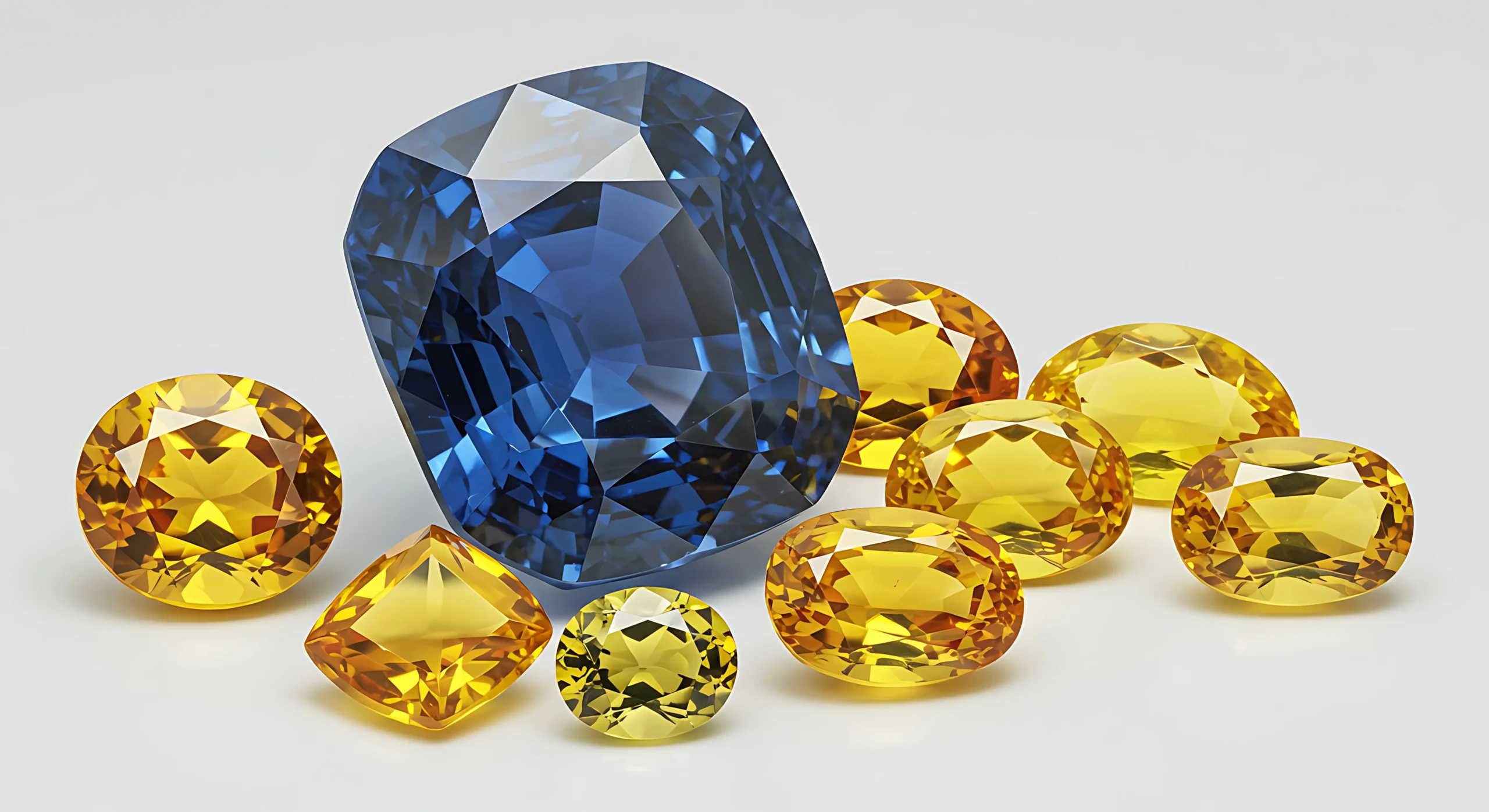
Why Fancy Color Diamonds Are the Smartest Jewelry Investment of the Decade
In November 2023, a 3.64-carat Fancy Vivid blue diamond sold at Sotheby’s Geneva for $6.1 million — over $1.67 million per carat — for a stone small enough to set in a cocktail ring. That sale wasn’t an outlier. It was a data point in a pattern that the Fancy Color Research Foundation (FCRF) has tracked for over fifteen years: natural fancy color diamonds have appreciated in value at a rate that consistently outpaces inflation, often outperforms traditional asset classes, and carries none of the carrying costs of real estate or equities.
If you’re exploring fancy color diamond investment — whether as a centerpiece for a once-in-a-lifetime piece of jewelry or as a tangible asset with aesthetic value — you’re asking the right question at the right time. This guide will explain what drives value in colored diamonds, how GIA grading works for color intensity, which hues command the strongest premiums in 2026, and what to verify before committing to a purchase anywhere in the USA.
The answer to why fancy color diamonds matter isn’t just financial. It starts with what makes them impossibly rare.
What Makes Fancy Color Diamonds So Rare — and So Valuable?
Fancy color diamonds derive their extraordinary value from a combination of extreme geological rarity and irreplaceable supply. Less than 1 in 10,000 carats of natural diamonds recovered globally qualifies as “fancy color” by GIA standards — and among those, vivid hues in pink, blue, and green represent a fraction of a fraction. Unlike colorless diamonds, no treatment reliably produces a natural fancy color grade that GIA will certify.
The color in a fancy diamond isn’t applied — it’s geological accident frozen over billions of years. Pink and red diamonds owe their color to structural deformation during formation, a phenomenon so uncommon that the Argyle Mine in Western Australia — once responsible for over 90% of the world’s pink diamond supply — closed permanently in 2020. That closure didn’t just reduce supply. It effectively capped it.
Blue diamonds derive their color from trace amounts of boron absorbed during crystal growth. Green diamonds — the rarest of the investment-grade hues — owe their color to natural radiation exposure over geological timescales. Yellow and orange diamonds result from nitrogen absorption, making them more available than pink, blue, or green, but still rarer than any colorless stone by orders of magnitude.
GIA grades fancy color diamonds on an intensity scale that runs from Faint → Very Light → Light → Fancy Light → Fancy → Fancy Intense → Fancy Vivid (or Fancy Deep / Fancy Dark for darker tones). The jump from Fancy Intense to Fancy Vivid can represent a price increase of 100% or more per carat for otherwise identical stones — making the color grade the single most consequential variable in any fancy color diamond investment decision.
Yellow Diamond Value Appreciation: What the Data Shows in 2025–2026
Yellow diamonds — particularly Fancy Intense and Fancy Vivid grades — have demonstrated consistent value appreciation over the past decade and represent the most accessible entry point into fancy color diamond investment for USA buyers. The FCRF’s Fancy Color Diamond Index recorded yellow diamonds appreciating approximately 50% over a ten-year period ending in 2024, with vivid grades outperforming fancy intense grades significantly in both appreciation rate and resale liquidity.
Yellow diamonds are the category where the investment thesis and the wearability thesis converge most elegantly. A Fancy Vivid yellow in a 1.5–3.0 carat range is visually spectacular — warm, luminous, and unmistakable against both platinum and yellow gold settings — while remaining attainable at price points accessible to serious fine jewelry buyers rather than only institutional collectors.
The financial case is grounded in documented data. According to the FCRF’s index, yellow diamonds have appreciated steadily even through broader market corrections, partly because their collector base is global and their liquidity at major auction houses — Christie’s, Sotheby’s, Bonhams — is well-established. The “Sun-Drop Diamond,” a 110.3-carat Fancy Vivid yellow pear shape, sold at Sotheby’s Geneva for $10.9 million in 2011. While that scale is beyond most buyers, it anchors the value of smaller vivid yellows in the same grading tier.
For 2026 buyers in the USA market, the yellow diamond sweet spot combines investment-grade color grading (Fancy Intense or Fancy Vivid) with practical wearability in the 1.0–2.5 carat range — stones that look extraordinary as center pieces in custom engagement rings or statement pendants while holding long-term value. DiamondsNColors’ custom design studio (link: /custom-order/) regularly works with clients who want to build meaningful jewelry around a yellow diamond center stone, whether the motivation is beauty, investment, or — most often — both.
Pink, Blue, and Green Diamond Prices in 2026: Understanding the Rarity Hierarchy
Among investment-grade fancy color diamonds, pink, blue, and green stones command the highest prices per carat in 2026, with Fancy Vivid pinks regularly trading at $100,000–$500,000+ per carat at major auction houses and blue diamonds reaching $1 million per carat or more at the vivid intensity level. Green diamonds are the rarest of the three to verify as naturally colored, requiring specialized GIA documentation that confirms radiation exposure was natural rather than artificial.
Understanding where pink, blue, and green diamond prices sit relative to each other requires understanding that scarcity in these categories operates at multiple levels simultaneously.
Pink diamonds post-Argyle are in a category of their own. With the world’s primary source permanently closed, every natural fancy pink now in circulation is finite inventory from a sealed mine. According to Rio Tinto’s final production reports, Argyle produced approximately 865 million carats of rough diamonds over its operational lifetime — of which roughly 0.1% qualified as pink. Post-closure auction results have reflected this directly: pink diamonds at Sotheby’s and Christie’s have set new per-carat records repeatedly since 2021.
Blue diamonds derive investment value from both extreme rarity and the prestige of their most famous exemplars — the Hope Diamond (45.52 carats, natural Fancy Deep Grayish Blue), the Blue Moon of Josephine (12.03 carats, Fancy Vivid Blue, sold for $48.5 million at Sotheby’s in 2015). Investment-grade blue diamonds remain among the highest-appreciating tangible assets tracked by the FCRF.
Green diamonds present the most complex due diligence challenge. Natural radiation-induced green color is surface-level in most stones, meaning the color can be partially or fully removed through cutting. GIA issues specific notation for natural color green diamonds — “natural color” noted on the grading report — making that report language non-negotiable for any investment-grade green diamond purchase.
| Diamond Color | Primary Source | GIA Intensity (Investment Grade) | Approx. Price Range/Carat | Argyle Closure Impact | Resale Liquidity |
|---|---|---|---|---|---|
| Yellow | Global (multiple) | Fancy Intense–Fancy Vivid | $5,000–$50,000+ | Minimal | High |
| Pink | Argyle (closed 2020) | Fancy–Fancy Vivid | $100,000–$500,000+ | Very high | Strong |
| Blue | Cullinan, South Africa | Fancy Intense–Fancy Vivid | $200,000–$1M+ | Moderate | Strong (auction) |
| Green | Multiple (rare) | Fancy–Fancy Vivid | $50,000–$300,000+ | Moderate | Moderate |
| Orange | Multiple | Fancy Intense–Fancy Vivid | $50,000–$250,000+ | Minimal | Moderate |
| Red | Argyle (primary) | Fancy (no vivid) | $300,000–$1M+ | Extreme | Limited (rarest) |
How GIA Grading Protects Your Fancy Color Diamond Investment
A GIA Fancy Color Diamond Grading Report is the non-negotiable foundation of any serious fancy color diamond investment. GIA evaluates color using standardized master stones and controlled lighting conditions, assigning both a hue (the dominant color) and an intensity grade (from Faint to Fancy Vivid). No reputable auction house, estate buyer, or dealer will consider an investment-grade fancy color diamond without a current GIA report confirming natural color origin.
The GIA color grading process for fancy diamonds is more complex than most buyers realize, and that complexity is precisely why the report matters so much. GIA evaluates three dimensions of color simultaneously: hue (the primary color — pink, blue, yellow, green), tone (the lightness or darkness of that color), and saturation (the strength and purity of the color). A single word on the report — the difference between “Fancy Intense” and “Fancy Vivid” — represents a committee decision made using standardized master stones under controlled conditions, and that word can represent hundreds of thousands of dollars in a single stone.
For fancy color diamonds with potentially treated or enhanced color, GIA also runs origin-of-color testing using advanced spectroscopy. HPHT (High Pressure High Temperature) treatment can transform a near-colorless diamond into a vivid yellow or blue — a process GIA identifies and discloses on the report. Irradiation treatment can produce green or blue hues artificially. Treated fancy color diamonds are not investment-grade, and GIA’s testing is currently the most reliable defense against misrepresentation at the point of sale.
💎 DiamondsNColors Designer’s Note We’ve reviewed GIA fancy color reports where the hue notation — a modifier like “orangy” or “brownish” before the primary color — dramatically changed the stone’s market value without being immediately apparent to a first-time buyer. A “Fancy Vivid Orangy Pink” and a “Fancy Vivid Pink” may look similar in photos; at auction, the pure pink commands meaningfully higher prices. We always walk clients through the full color description on the GIA report, not just the intensity grade headline.
Fancy Color Diamond Investment vs. Colorless Diamonds: Which Holds Value Better?
Fancy color diamonds have historically outperformed colorless diamonds as investments, primarily because their value drivers — extreme rarity, irreplaceable mine supply, and global collector demand — are more concentrated and defensible than those of colorless stones. The FCRF Fancy Color Diamond Index recorded compound annual appreciation of approximately 7–10% for top-tier fancy colors over the decade ending in 2024, a period during which colorless diamond prices experienced more volatility.
This comparison requires intellectual honesty on two points: past performance in any tangible asset class doesn’t guarantee future returns, and liquidity in fancy color diamonds is fundamentally different from colorless stones. You can sell a one-carat round brilliant GIA Excellent cut colorless diamond within days on multiple platforms. A 2-carat Fancy Vivid pink may take months to find the right buyer — but that buyer will pay a premium that no colorless diamond commands.
The investment case for fancy color diamonds rests on three structural advantages:
Finite, declining supply. No new Argyle mine is opening. The geological conditions that produce intense pink, blue, and green diamonds are not reproducible or predictable, and known diamond-producing regions are maturing. Supply is structurally constrained in a way that colorless diamonds — mined in larger volume globally — are not.
Laboratory-grown diamonds do not affect fancy color value. The rise of HPHT and CVD lab-grown diamonds has created genuine price pressure on colorless natural diamonds at the commodity end of the market. Natural fancy color diamonds are effectively isolated from this pressure because the collector market for investment-grade fancy colors specifically seeks natural, GIA-certified stones — a distinction that matters enormously to the buyers who set auction records.
Global demand with portable value. A Fancy Vivid yellow or pink diamond is the same asset in Las Vegas, London, Hong Kong, and Geneva. That geographic liquidity makes fancy color diamonds unusual among luxury tangible assets.
DiamondsNColors’ education resources (link: /education/) include guidance on evaluating diamond value factors for both colorless and fancy color stones.
Where to Buy Rare Colored Diamonds in the USA: What to Look for Before You Commit
To buy investment-grade rare colored diamonds in the USA, require a current GIA Fancy Color Diamond Grading Report confirming natural color origin, verify the stone’s color description against current FCRF pricing benchmarks, and work with a jeweler who has documented experience sourcing and evaluating fancy color diamonds — not simply reselling GIA-certified stones without the expertise to evaluate their investment merit or setting suitability.
The USA market for rare colored diamonds is deeper than most buyers assume. Major auction houses — Sotheby’s New York, Christie’s New York, Bonhams — hold dedicated jewelry sales multiple times per year where fancy color diamonds trade publicly. These sales establish price transparency that private dealers must reflect. Before purchasing privately, research the most recent auction results for comparable stones (same hue, same intensity grade, similar carat weight) to calibrate whether an asking price is reasonable.
For buyers shopping nationally via diamondsncolors.com or visiting our Las Vegas showroom at 8965 S. Eastern Ave., here’s the due diligence checklist that protects every fancy color diamond investment:
Require: A GIA Fancy Color Diamond Grading Report — not a colored stone report, not a letter, a full grading report with intensity grade and natural color confirmation.
Read: The full color description, including any modifiers (orangy, brownish, grayish) that affect value relative to pure-hue stones.
Compare: The asking price against FCRF index pricing and recent auction comparables for that hue and intensity grade.
Ask: Whether the stone has previously appeared at auction, and if so, request the auction record.
Verify: That any setting proposed for an investment-grade fancy color doesn’t compromise the stone’s certification status or resell-ability — bezel settings that cover the girdle can sometimes complicate future re-grading.
JCK Las Vegas, the world’s largest annual jewelry trade show held each June in Nevada, is where major fancy color diamond parcels are previewed and traded — an indication of Las Vegas’s genuine position in the USA fine jewelry investment market, not just its retail one. Our team attends annually to source exceptional stones for private clients (link: /contact-us/).
How to Set a Fancy Color Diamond Without Diminishing Its Investment Value
Setting a fancy color diamond in fine jewelry requires balancing wearability against investment preservation. The choice of metal color, prong style, and setting design significantly affects how the diamond’s color reads visually — and certain setting configurations can affect future resell-ability or re-grading. Yellow and rose gold settings intensify warm fancy colors; platinum and white gold settings allow cool-toned blues and greens to read with maximum purity and depth.
The setting decision for a fancy color diamond is where aesthetic artistry and investment discipline must find each other. Unlike a colorless diamond — where platinum and a simple four-prong setting is almost universally optimal — fancy colors respond dramatically to metal choice.
Yellow diamonds intensify beautifully in 18k yellow gold settings, where the warm metal casts a subtle reflective glow into the stone’s pavilion. The same yellow diamond in a platinum setting may read slightly cooler and less vivid to the eye — even though the GIA grade is identical.
Pink diamonds are traditionally set in rose gold or pink gold for the same reason: the metal’s warmth amplifies the stone’s flush and creates a more visually cohesive piece. White metal settings — platinum or white gold — create contrast that can make a lighter pink appear even more delicate and feminine, though at the cost of some perceived saturation.
Blue and green diamonds read most powerfully in platinum or white gold, where the cool metal does nothing to soften the stone’s color and lets the GIA-graded hue speak directly.
On investment preservation: avoid closed-back settings that prevent future re-examination of the pavilion, and prefer settings where the full girdle remains accessible for a future grader. Some collectors choose to keep investment-grade stones unmounted — or mount them in reversible settings — for maximum flexibility.
DiamondsNColors’ custom design studio (link: /custom-order/) specializes in settings that honor the visual and investment character of fancy color diamonds equally. Our engagement and bridal collection (link: /engagement-and-bridal/) includes pieces designed around fancy color centers for buyers who want both a meaningful ring and a meaningful asset.
Conclusion
The decision to pursue a fancy color diamond investment is rarely just financial — and it doesn’t need to be. These stones earn their value through properties that are simultaneously geological, aesthetic, and economic: colors that cannot be manufactured, supplies that cannot be replenished, and beauty that has commanded attention at every auction podium from Geneva to New York.
Take these four things forward from this guide: GIA certification of natural color origin is non-negotiable for any investment-grade purchase. Pink and blue diamonds carry the strongest structural supply scarcity post-Argyle closure. Yellow diamonds offer the most accessible entry point with documented appreciation and strong resale liquidity. And the setting you choose either protects or undermines the stone’s long-term value — metal selection matters as much as design.
Whether you’re drawn to a Fancy Vivid yellow for its solar warmth, a natural pink for its post-Argyle rarity, or a blue for the deep, oceanic gravity that no photograph quite captures — our team at DiamondsNColors in Las Vegas is here to guide you to the right stone and the right setting for your story. Book a private consultation or explore our fancy diamond collection online (link: /contact-us/).
FAQ SECTION
Are fancy color diamonds a good investment in 2026?
Fancy color diamond investment has demonstrated consistent long-term value appreciation, particularly for pink, blue, and Fancy Vivid yellow grades. The FCRF Fancy Color Diamond Index recorded approximately 50% appreciation for yellow diamonds over a decade ending in 2024, with pink and blue stones outperforming significantly. Supply constraints — including the permanent closure of the Argyle Mine in 2020 — support continued scarcity-driven value for top-tier colors.
What is the rarest color in a natural fancy color diamond?
Red diamonds are the rarest natural fancy color, with only a few hundred known to exist in gem quality worldwide. Fancy pink diamonds — particularly post-Argyle Mine closure in 2020 — represent the rarest investment-accessible category. Natural blue and green diamonds follow, with green diamonds requiring specialized GIA documentation to confirm the color was produced by natural rather than artificial radiation exposure.
How does GIA grade fancy color diamonds differently from colorless diamonds?
GIA grades fancy color diamonds on a color intensity scale — Faint, Very Light, Light, Fancy Light, Fancy, Fancy Intense, Fancy Vivid, Fancy Deep, or Fancy Dark — rather than the D-to-Z colorless scale. GIA evaluates hue, tone, and saturation under controlled lighting conditions, and also tests for color origin (natural vs. treated). A full GIA Fancy Color Diamond Grading Report is essential for any investment-grade purchase.
Why did the Argyle Mine closure affect pink diamond prices so significantly?
The Argyle Mine in Western Australia, which closed permanently in 2020, was responsible for over 90% of the world’s pink diamond supply during its operation. Its closure effectively capped the total available inventory of natural pink diamonds at a fixed global level — no comparable alternative source exists. This structural supply constraint has driven consistent price appreciation for Fancy and Fancy Vivid pink diamonds at major auction houses since the closure.
Can a lab-grown diamond be fancy color, and does it hold investment value?
Lab-grown diamonds can be produced in fancy colors — particularly yellow and blue — through HPHT and CVD processes. However, lab-grown fancy color diamonds do not hold investment value comparable to their natural counterparts. GIA clearly discloses laboratory-grown origin on grading reports. Investment-grade fancy color diamonds are exclusively natural stones with GIA certification confirming both natural color and natural diamond origin.
What setting is best for a yellow diamond to maximize its visual impact?
Yellow diamonds achieve their most visually intense appearance in 18k yellow gold settings, where the warm metal reflects into the pavilion and amplifies the stone’s natural saturation. Rose gold is also flattering. Platinum and white gold settings create more contrast, which suits some designs but can make the yellow appear slightly cooler to the eye. The GIA color grade is unaffected by metal choice — the difference is purely visual.