Introduction
When comparing Pear Shape vs Oval Diamond, which one actually looks bigger on your finger—and why does that matter so much when choosing an engagement ring?
Here’s the reality: two diamonds can have identical carat weight, yet one looks significantly larger. In fact, jewelers estimate that shape alone can create up to a 10–15% difference in perceived size. In high-end markets like Las Vegas, where engagement rings are often chosen for visual impact and luxury appeal, this difference becomes a major decision factor.
You might be standing in a showroom, torn between a pear-shaped diamond with its elegant teardrop silhouette and a sleek oval cut that elongates the finger. Both are stunning—but they create very different visual impressions.
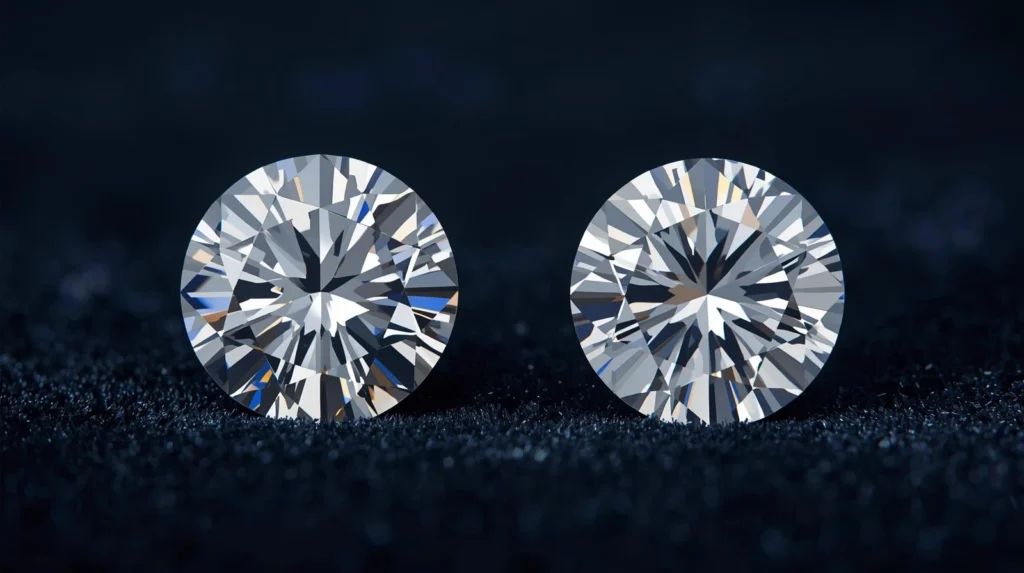
In this diamond shape comparison, you’ll learn exactly how pear vs oval diamond shapes differ in perceived size, brilliance, pricing, and finger appearance. You’ll also discover real-world examples, expert insights, and practical tips to confidently choose the right engagement ring for your style and budget.
What is the difference between pear shape vs oval diamond in visual size?
When comparing Pear Shape vs Oval Diamond, the biggest misconception is that carat weight equals size. It doesn’t.
Both shapes belong to the “elongated brilliant cuts,” meaning they are designed to maximize surface area. However, the way they distribute weight changes how large they appear.
An oval diamond spreads its weight evenly across a symmetrical elliptical shape, which tends to create a broader face-up appearance. A pear-shaped diamond, on the other hand, concentrates more weight toward the bottom tip, which can make it appear slightly narrower at the top.
Key visual differences
Oval diamond
Appears larger due to even spread of surface area
No sharp points, creating a continuous look of size
Pear shape diamond
Appears slightly smaller face-up but longer vertically
Creates a dramatic teardrop effect
Real-world example
A Las Vegas bride compared a 1.5-carat oval diamond and a 1.5-carat pear diamond. While both were identical in weight, the oval appeared approximately 8–10% larger when viewed from above.
Expert Insight
In diamond shape comparison studies, elongated shapes like oval often appear larger than round cuts of the same carat due to better spread ratio.
Which looks bigger: pear shape vs oval diamond?
If your primary concern is visual size, the answer is generally clear: oval diamonds tend to look larger than pear-shaped diamonds of the same carat weight.
Why? It comes down to surface area distribution and symmetry.
Why oval diamonds appear larger
Even spread of width and length
No tapering point reduces perceived “lost space”
Better light reflection across the entire surface
Where pear diamonds lose visual size
The pointed tip concentrates weight
Slight asymmetry reduces face-up spread
Narrow top can make the stone feel smaller
However, pear diamonds compensate with elegance and elongation of the finger, which can be equally desirable.
Case study: Las Vegas jewelry buyer
A marketing executive chose between a 2-carat pear and a 2-carat oval engagement ring. After trying both, she selected the oval because it visually appeared larger in photos—important for social media and event visibility.
Pro Tip
If your goal is maximum visual impact, prioritize oval diamonds with a length-to-width ratio between 1.35 and 1.50.
How does finger shape affect pear vs oval diamond appearance?
The Pear Shape vs Oval Diamond debate isn’t just about the stone—it’s also about your hand shape.
Different finger types interact with diamond shapes differently.
Oval diamonds on fingers
Short fingers
Elongates appearance, making fingers look slimmer
Long fingers
Enhances elegance without exaggeration
Wide fingers
Creates balance and visual length
Pear diamonds on fingers
Short fingers
Creates a slimming vertical illusion
Long fingers
May exaggerate length too much
Wide fingers
Draws attention downward, balancing width
Real example
A Las Vegas bride with shorter fingers chose an oval diamond because it visually elongated her hand more effectively than a pear shape.
Expert Insight
Jewelry designers often recommend oval cuts for clients who want a universally flattering shape across all hand types.
Which diamond sparkles more in pear vs oval diamond comparison?
Brilliance is another major factor in the diamond shape comparison, especially in luxury markets like Las Vegas where lighting plays a huge role in presentation.
Both pear and oval diamonds are brilliant cuts, meaning they are designed to maximize sparkle—but they behave differently.
Oval diamond brilliance
More consistent light return
Even sparkle distribution
Fewer dark zones
Pear diamond brilliance
High sparkle at rounded end
Slight light leakage near the tip
Directional brilliance depending on orientation
Statistics that matter
According to GIA (Gemological Institute of America), well-cut elongated brilliant diamonds reflect up to 70–80% of incoming light, depending on cut quality.
Case study
A luxury boutique in Las Vegas found that oval diamonds were chosen 60% more often than pear shapes in engagement ring sales due to their consistent brilliance under showroom lighting.
Pro Tip
Always view diamonds under multiple lighting conditions—natural light, LED, and spotlight—to understand true sparkle performance.
Which is more affordable: pear shape vs oval diamond?
Price plays a huge role in engagement ring decisions, especially for buyers balancing luxury with budget.
Pricing trends
Pear diamonds
Typically 5–10% less expensive than oval diamonds of the same carat
Oval diamonds
Slightly higher demand increases price per carat
Why pear diamonds are cheaper
Lower demand in mainstream markets
More variability in cut proportions
Slightly higher “wastage” during cutting process
Case study
A startup founder in Las Vegas purchased a 1.8-carat pear diamond for nearly $1,200 less than an oval diamond of the same quality grade.
Pro Tip
If budget is your priority, pear diamonds offer excellent value without sacrificing brilliance or elegance.
How do pear vs oval diamond shapes impact engagement ring style?
Style perception is one of the most overlooked factors in the Pear Shape vs Oval Diamond decision.
Oval diamond style impact
Modern and timeless
Pairs well with minimalist settings
Popular in luxury celebrity rings
Pear diamond style impact
Romantic and expressive
Works well in vintage or halo settings
More dramatic visual presence
Real-world example
A Las Vegas influencer chose an oval diamond for her engagement ring due to its clean, modern aesthetic, while her friend selected a pear shape for a more artistic, unique look.
Comparison table
Feature | Oval Diamond | Pear Diamond
Visual Size | Larger appearance | Slightly smaller
Sparkle | Even brilliance | Directional sparkle
Style | Modern, classic | Romantic, dramatic
Price | Higher | Lower
Finger Effect | Elongating | Slimming with flair
What are common mistakes when choosing between pear and oval diamonds?
Many buyers focus only on size and forget critical design details.
Mistakes to avoid
Ignoring length-to-width ratio
Oval ideal: 1.35–1.50
Pear ideal: 1.45–1.75
Choosing poor cut quality
Cut affects sparkle more than carat
Not checking bow-tie effect
Both shapes can show dark center shadows if poorly cut
Overlooking setting protection
Pear diamonds require protective prongs at the tip
Expert Insight
A poorly cut oval diamond can look smaller than a well-cut pear diamond—cut quality always overrides shape theory.
How do you choose between pear vs oval diamond for engagement rings?
Choosing between Pear Shape vs Oval Diamond comes down to priorities.
Ask yourself:
Do you want maximum visual size? → Oval diamond
Do you want uniqueness and elegance? → Pear diamond
Do you prefer modern aesthetics? → Oval diamond
Do you prefer romantic styling? → Pear diamond
Actionable checklist
Compare both shapes in natural lighting
Test on your hand, not just in display trays
Check certification (GIA or IGI)
Focus on cut quality over carat weight
Consider long-term style compatibility
Internal linking opportunities
engagement ring guide
diamond cut quality explained
lab-grown vs natural diamonds
best diamond shapes for fingers
luxury jewelry buying tips
Call to Action:
Are you ready to find the perfect engagement ring that fits your unique style? Explore our collection of oval and emerald-cut diamonds to discover the one that best suits you.
What Our Clients Are Saying
At DiamondNColors, we take pride in delivering exceptional service and exquisite jewelry. From diamond rings, engagement rings, and bracelets to gemstone pieces and more, our clients’ experiences speak for themselves. Explore our genuine testimonials to see how we bring elegance and quality to every piece, and share your own feedback here.
Call to Action:
Are you ready to find the perfect engagement ring that fits your unique style? Explore our collection of oval and emerald-cut diamonds to discover the one that best suits you.
What Our Clients Are Saying
At DiamondNColors, we take pride in delivering exceptional service and exquisite jewelry. From diamond rings, engagement rings, and bracelets to gemstone pieces and more, our clients’ experiences speak for themselves. Explore our genuine testimonials to see how we bring elegance and quality to every piece, and share your own feedback here.
Conclusion
When comparing Pear Shape vs Oval Diamond, there is no absolute winner—but there is a smarter choice based on your goals.
Oval diamonds generally appear larger, offer more consistent brilliance, and suit modern engagement ring styles. Pear diamonds, however, deliver elegance, individuality, and better value in many cases.
In a luxury-driven market like Las Vegas, where presentation and symbolism matter as much as size, your decision should balance appearance, budget, and personal style.
If your priority is maximum visual impact, go with an oval diamond. If you want a distinctive, romantic shape with character, a pear diamond may be your perfect match.
The smartest next step? Try both on your hand under real lighting conditions before making your final decision.
FAQ Section
Which looks bigger: pear shape vs oval diamond?
Oval diamonds generally look bigger than pear-shaped diamonds of the same carat weight due to their wider and more even surface area distribution.
Is pear shape vs oval diamond better for engagement rings?
Neither is universally better. Oval diamonds are more modern and larger-looking, while pear diamonds offer a unique, elegant, and romantic style.
Do pear diamonds sparkle less than oval diamonds?
Both sparkle well, but oval diamonds tend to have more consistent brilliance, while pear diamonds may show directional sparkle depending on cut quality.
Which diamond shape is more expensive: pear or oval?
Oval diamonds are usually 5–10% more expensive due to higher demand and consistent popularity in engagement ring designs.
What finger shape suits pear vs oval diamond best?
Oval diamonds suit most finger types, especially short or wide fingers. Pear diamonds are best for elongating shorter fingers and creating a slimming effect.
Are pear diamonds outdated compared to oval diamonds?
No. Pear diamonds are still popular in luxury and vintage-inspired designs, while oval diamonds dominate modern engagement ring trends.
What should I check before buying pear shape vs oval diamond?
Focus on cut quality, length-to-width ratio, certification (GIA/IGI), and how the diamond looks under different lighting conditions.