Introduction
A client once walked into a Las Vegas showroom convinced all rubies were the same—until he saw a Burmese ruby priced 5x higher than a Mozambique stone of similar size. That moment highlights a critical truth: origin matters more than most buyers realize.
In this guide, you’ll discover how Burma, Mozambique, and Thailand rubies differ in value, appearance, and investment potential. By the end, you’ll know exactly how to evaluate a ruby gemstone with confidence and avoid overpaying in a competitive market like Las Vegas.
What Makes a Ruby stone Valuable in the First Place?
Before comparing origins, you need to understand what drives ruby stone value. Think of origin as one layer important, but not the only factor.
Core Value Drivers
Color is king. The most valuable rubies display a vivid “pigeon blood” red—slightly bluish, intensely saturated, and glowing even in low light. According to GIA standards, color contributes up to 60% of a ruby’s value.
Clarity comes next. Unlike diamonds, rubies naturally contain inclusions. However, fewer inclusions increase transparency and price.
Cut and carat weight also matter, but less than color and clarity.
Real-World Insight
A 1-carat Burmese ruby with exceptional color can sell for over $15,000 per carat, while a similar-sized Thai ruby might sell for under $2,000 per carat due to darker tones.
Pro Tip
When evaluating a ruby stone in Las Vegas, always ask for certification from GIA or AGL. Origin claims without documentation are risky—especially in high-value transactions.
How Do Burma Rubies Compare to Mozambique Rubies?
This is the most searched ruby origin comparison—and for good reason.
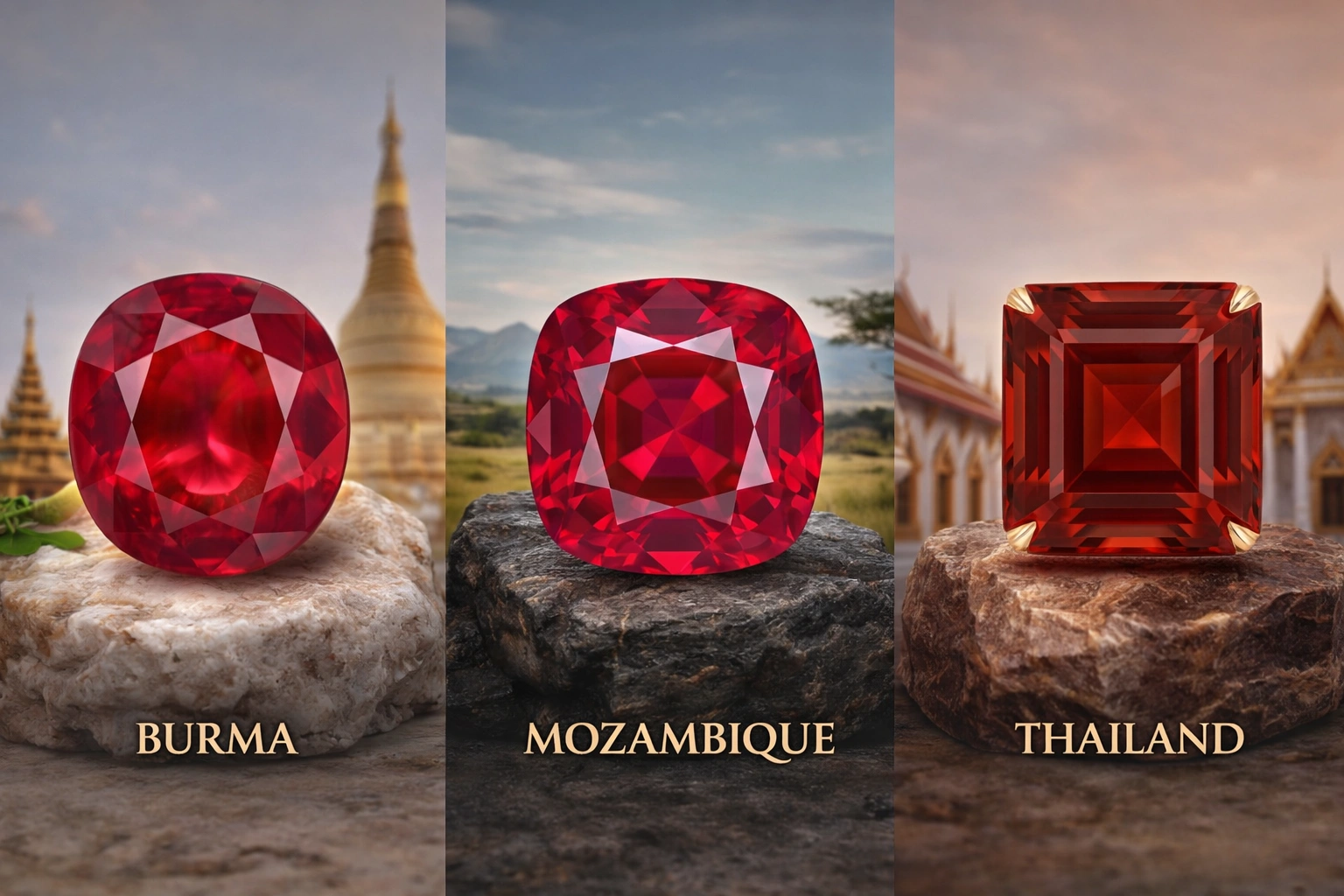
Burma Rubies: The Gold Standard
Burma (Myanmar) rubies are considered the pinnacle of ruby stone quality. They’re known for:
- Intense red color with a slight blue undertone
- Strong fluorescence, making them glow in sunlight
- Fine silk inclusions that enhance softness and depth
Mozambique Rubies: The Modern Contender
Mozambique rubies entered the market aggressively after major discoveries in 2009. Today, they dominate global supply.
They offer:
- High clarity compared to Burmese stones
- Strong color, sometimes rivaling Burma
- Better affordability for similar sizes
Case Study
A Las Vegas jeweler reported that 70% of mid-range ruby sales now involve Mozambique stones due to their balance of quality and price.
Key Difference
Burma rubies are rarer and command premium pricing. Mozambique rubies offer excellent value and are often visually indistinguishable to untrained eyes.
Expert Insight
If you’re investing, Burma remains king. If you’re buying for beauty and budget, Mozambique is often the smarter choice.
Why Are Burma Ruby Gems So Expensive?
Let’s address the elephant in the room: price.
Scarcity Drives Value
Burma’s Mogok region has produced rubies for centuries, but supply is limited. Mining restrictions and political instability have further reduced availability.
Historical Prestige
Collectors and luxury buyers associate Burmese rubies with royalty and legacy. This perception drives demand—and price.
Auction Data
According to Sotheby’s, Burmese rubies consistently break auction records. A 25-carat Burmese ruby sold for over $30 million, setting a benchmark for high-end stones.
Las Vegas Market Insight
Luxury retailers in Las Vegas often highlight Burmese origin prominently because it signals exclusivity to high-net-worth buyers.
Pro Tip
If someone offers you a “cheap Burmese ruby stone,” be cautious. It may be heavily treated or misrepresented.
Are Thailand Rubies Still Worth Buying Today?
Thailand rubies often get overlooked—but that’s a mistake.
Characteristics of Thai Rubies
- Darker red tones, often with brown undertones
- Lower fluorescence
- Typically heat-treated to enhance color
Market Position
Thai rubies are considered commercial-grade stones, widely used in jewelry rather than investment pieces.
Real-World Example
Many affordable ruby rings sold in tourist-heavy Las Vegas stores use Thai rubies because they offer durability at a lower price point.
When They Make Sense
If you’re buying a ruby stone for everyday wear rather than investment, Thai rubies can be a practical option.
Common Mistake
Buyers often reject Thai rubies outright without considering budget or purpose. Not every ruby needs to be investment-grade.
How Can You Tell the Origin of a Ruby Gems?
This is where many buyers get misled.
Certification Is Essential
Only reputable gem labs like GIA or AGL can accurately determine origin using advanced spectroscopy.
Visual Clues (But Not Reliable Alone)
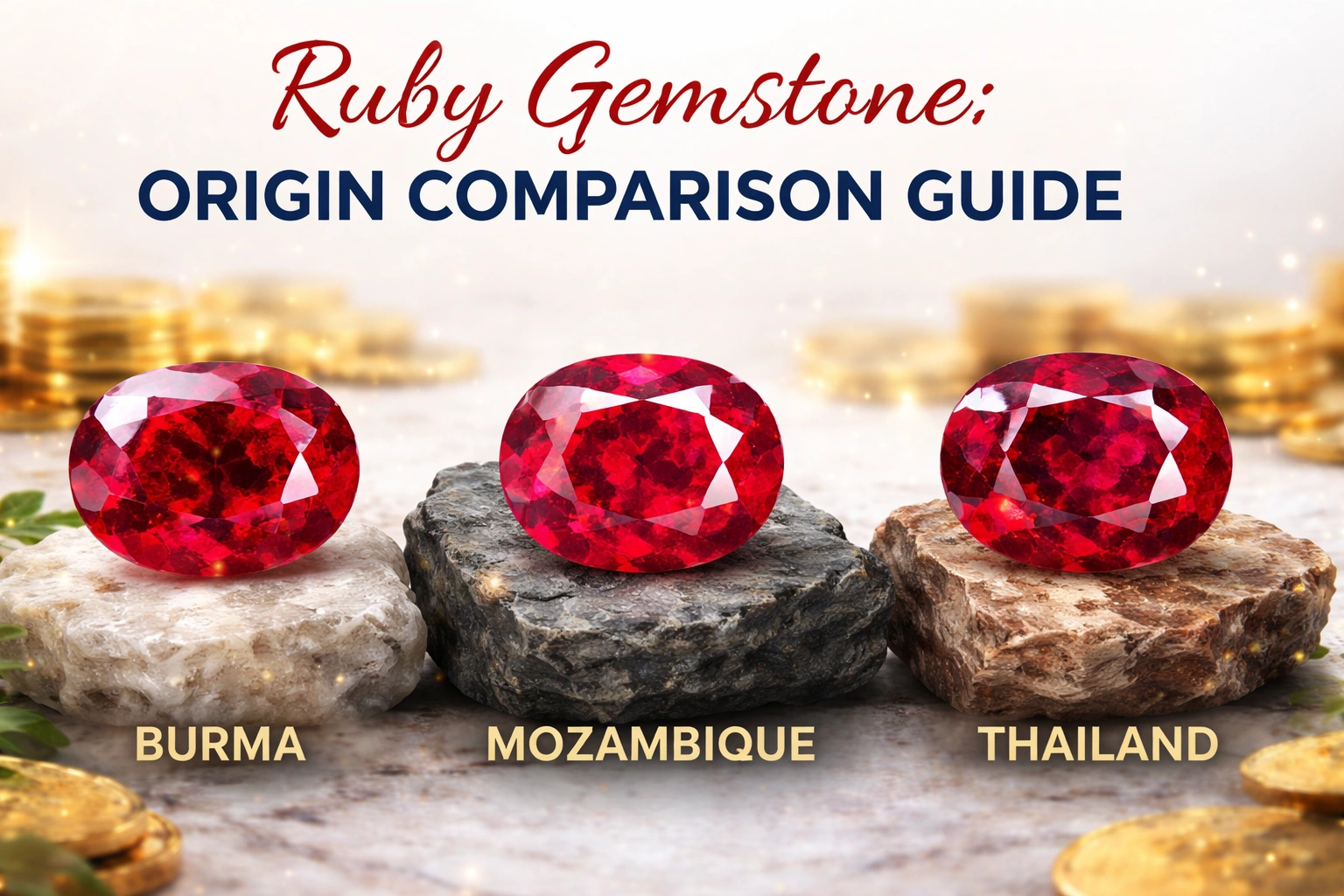
- Burma: glowing red with soft inclusions
- Mozambique: cleaner, slightly darker
- Thailand: deeper red with brown tones
Industry Statistic
Over 80% of consumers cannot visually distinguish ruby origins without certification, according to gemological studies.
Las Vegas Buyer Tip
Always request a lab report before purchasing a ruby gems above $2,000. Many reputable dealers will provide this upfront.
Which Ruby Origin Offers the Best Investment Value?
Let’s talk ROI.
Investment Ranking
- Burma – highest long-term appreciation
- Mozambique – strong growth potential
- Thailand – minimal investment upside
Why Mozambique Is Rising
Mozambique rubies are gaining recognition as supply stabilizes and quality improves. Some high-end stones now rival Burmese rubies in auctions.
Case Study
A collector purchased a 3-carat Mozambique ruby in 2012 for $9,000. By 2025, similar stones were selling for over $25,000.
Expert Insight
Diversifying your gemstone portfolio with both Burmese and Mozambique rubies can balance prestige and growth.
What Should You Look for When Buying a Ruby in Las Vegas?
Buying in Las Vegas comes with unique considerations.
Verify Authenticity
Ensure the ruby stone is natural—not synthetic or glass-filled.
Understand Treatments
Heat treatment is common and acceptable. However, lead-glass-filled rubies are significantly less valuable.
Compare Pricing
Visit multiple dealers. Prices can vary widely depending on branding and location.
Ask the Right Questions
- What is the origin?
- Is it certified?
- Has it been treated?
- What is the return policy?
Pro Tip
High-end jewelers in Las Vegas often price based on perceived luxury, not just gemstone quality. Don’t hesitate to negotiate.
Ruby Origin Comparison Table
| Feature | Burma Ruby | Mozambique Ruby | Thailand Ruby |
|---|---|---|---|
| Color Quality | Exceptional | Very Good | Moderate |
| Clarity | Moderate | High | Moderate |
| Price | Very High | Medium-High | Low-Medium |
| Investment Value | Excellent | Strong | Limited |
| Availability | Rare | Widely Available | Common |
Call to Action:
Are you ready to find the perfect engagement ring that fits your unique style? Explore our collection of oval and emerald-cut diamonds to discover the one that best suits you.
What Our Clients Are Saying
At DiamondNColors, we take pride in delivering exceptional service and exquisite jewelry. From diamond rings, engagement rings, and bracelets to gemstone pieces and more, our clients’ experiences speak for themselves. Explore our genuine testimonials to see how we bring elegance and quality to every piece, and share your own feedback here.
Conclusion
Choosing the right ruby stone isn’t just about color—it’s about understanding origin, value, and purpose.
Burma offers unmatched prestige and long-term investment potential. Mozambique delivers exceptional quality at a more accessible price. Thailand provides affordable options for everyday jewelry.
If you’re buying in Las Vegas, your advantage lies in knowledge. Ask the right questions, demand certification, and align your purchase with your goals—whether that’s investment, gifting, or personal style.
Next step? Compare certified stones side-by-side and trust your eye—backed by expert verification.
FAQ Section
1. What is the best origin for a ruby gemstone?
Burma is considered the best due to its superior color and rarity. However, Mozambique rubies offer excellent quality at a lower price, making them a strong alternative for most buyers.
2. Is Mozambique ruby as good as Burma ruby?
In some cases, yes. High-quality Mozambique rubies can rival Burmese stones in appearance, but they generally lack the same prestige and historical value.
3. Why are Burma rubies more expensive?
Limited supply, historical significance, and strong market demand drive higher prices. Collectors value their rarity and consistent color quality.
4. Are Thailand rubies real rubies?
Yes, Thailand rubies are natural but often darker and heavily treated. They are typically used in commercial jewelry rather than investment pieces.
5. How can I verify a ruby gemstone’s origin?
Request certification from a reputable lab like GIA or AGL. Visual inspection alone is not reliable for determining origin.
6. Is ruby a good investment in 2026?
Yes, especially Burmese and high-quality Mozambique rubies. The gemstone market has shown steady growth, with colored stones gaining popularity among investors.
7. What should I avoid when buying a ruby?
Avoid uncertified stones, overly cheap “Burmese” rubies, and heavily treated stones like glass-filled rubies. These significantly reduce long-term value.