Introduction: Natural vs. Lab-Grown Diamonds in 2026
Lab-grown diamond prices have dropped more than 80% since 2020, according to the Rapaport Diamond Report — and that single fact has rewritten the conversation happening in every fine jewelry showroom across the USA. What was once a fringe alternative is now a mainstream choice, and yet the diamond market has never been more complicated to navigate alone.
If you’re weighing a natural diamond against a lab-grown one right now, you’re facing a real decision — not just a budget exercise. The two options look identical in a ring. A gemologist with a loupe can’t tell them apart by eye alone. But they are not the same in ways that matter enormously to some buyers and not at all to others.
This guide will walk you through what’s actually changed in the natural vs. lab-grown diamond debate in 2026: pricing realities, resale value, GIA certification differences, environmental considerations, and the question no one else will ask you directly — what does this diamond need to mean to you? By the end, you’ll know exactly which choice aligns with your values, your budget, and the story you want this stone to tell for decades to come.
What’s the Actual Difference Between Natural and Lab-Grown Diamonds in 2026?
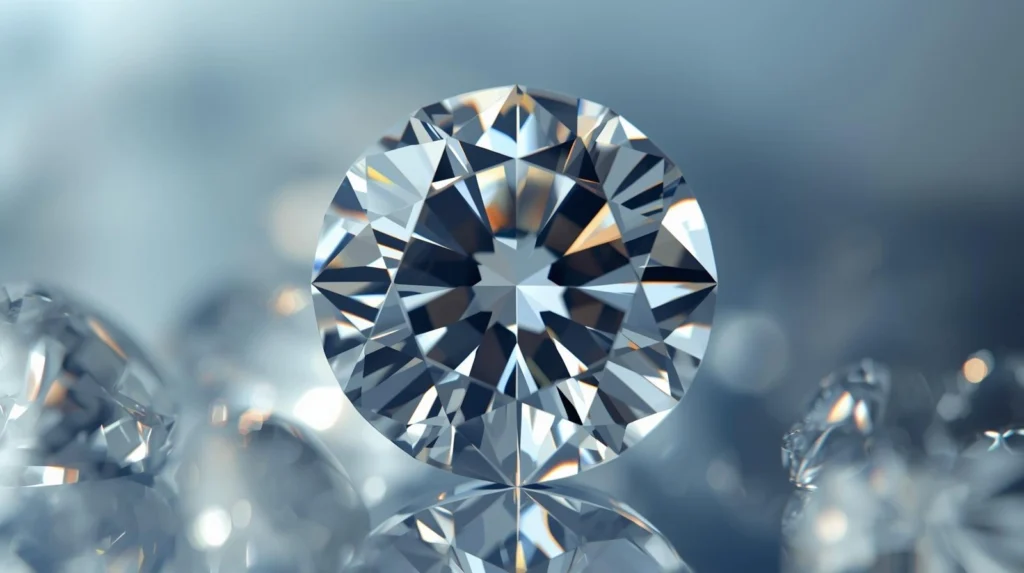
Natural diamonds form over billions of years under extreme heat and pressure deep within the earth. Lab-grown diamonds are created in weeks using either High Pressure High Temperature (HPHT) or Chemical Vapor Deposition (CVD) technology. Both are real diamonds — chemically, physically, and optically identical — but their origins, availability, and market values differ significantly in 2026.
The word “real” is the one that trips buyers up most often. Lab-grown diamonds are not simulants like cubic zirconia or moissanite — they are genuine diamonds, composed of carbon atoms arranged in the same crystal structure. The GIA (Gemological Institute of America) grades both types using the same 4Cs methodology: cut, color, clarity, and carat weight. Since 2018, the GIA has issued grading reports for lab-grown diamonds, though the report format is distinct from natural diamond reports and notes the laboratory origin clearly.
What separates them in 2026 is not chemistry — it’s scarcity. Natural diamonds took geological time to form. Lab-grown diamonds can be manufactured at scale, which is exactly why their prices have fallen so dramatically. The Rapaport Report tracks the wholesale diamond market, and the data shows lab-grown diamond prices continuing to decline year-over-year as production technology becomes more efficient and more widely available globally.
At DiamondsNColors’ Las Vegas showroom, we work with buyers every week who arrive holding both types of stones and asking the same question: can you tell them apart? In most cases under normal lighting and viewing conditions, no — and that’s the whole point of understanding the difference before you buy, not after.
For a deeper grounding in diamond quality standards, DiamondsNColors [Diamond Grading Guide](link: /diamond-grading-guide/) is a strong starting point before you evaluate any stone.
Natural vs. Lab-Grown Diamond Comparison: 2026
| Attribute | Natural Diamond | Lab-Grown Diamond |
| Origin | Mined from earth (billions of years old) | Created in a lab (weeks to months) |
| Chemical Composition | Pure carbon crystal | Pure carbon crystal (identical) |
| GIA Certification | Full grading report | Grading report (lab origin noted) |
| Price per Carat (1ct, VS2, G) | ~$4,000–$7,000 | ~$400–$1,200 |
| Resale Value | Retains moderate value; rare stones appreciate | Rapidly declining resale value |
| Availability | Finite and declining | Abundant and increasing |
| Environmental Impact | Mining footprint (varies by source) | Energy-intensive manufacturing |
| Emotional/Symbolic Value | Billions of years of natural history | Modern origin; no geological age |
| Best For | Investment, heirlooms, rare stones | Maximum size/budget, fashion jewelry |
Lab-Grown Diamond Pros and Cons: What USA Buyers Are Discovering in 2026
Lab-grown diamonds offer a significant price advantage — often 60–85% less than natural diamonds of comparable grading — allowing buyers to choose a larger or higher-quality stone within the same budget. The primary drawback is resale value: lab-grown diamond prices have fallen sharply since 2020, and most retailers now offer little to no resale or trade-in value for them.
The appeal is obvious. A $5,000 budget that buys a natural 0.7-carat G/VS2 round brilliant can instead purchase a lab-grown 2-carat stone in the same color and clarity range. For buyers whose priority is visual impact and who are not thinking about eventual resale, the math is compelling.
But the cons deserve equal weight. Resale markets for lab-grown diamonds have contracted considerably. Jewelers of America noted in their 2024 trade survey that secondary market pricing for lab-grown stones had become nearly negligible at the consumer level — meaning the diamond you purchase today may be difficult to sell or trade for meaningful value in five or ten years. This is not a rumor from the natural diamond industry; it’s basic supply economics. When a product can be manufactured at scale, its price will continue to fall, and stones purchased at today’s prices will be worth less as the market matures.
The pros of lab-grown diamonds, summarized:
- Dramatically lower cost per carat
- Identical optical and physical properties to natural diamonds
- GIA-certifiable and fully gradable
- No direct mining impact at the point of purchase
The cons, plainly stated:
- Rapidly declining resale and trade-in value
- Growing market saturation making future value difficult to predict
- No rarity premium — unlimited supply means no scarcity-driven appreciation
- Some sentimental buyers find the manufactured origin less meaningful
For buyers building a long-term jewelry wardrobe or purchasing a piece meant to become an heirloom, these are not small considerations.
DiamondsNColors Designer’s Note One thing we notice consistently in our Las Vegas showroom: buyers who prioritize the feeling of wearing a diamond — the sparkle, the presence, the daily beauty of it — often find equal satisfaction in a well-cut lab-grown stone. But buyers who want to tell a geological story, pass a stone to a daughter, or think of their ring as a tangible asset tend to feel differently once they hold a natural diamond and understand what they’re actually wearing. Neither instinct is wrong. We simply want you to be clear on what yours is.
Diamond Resale Value Comparison: Will Your Stone Hold Its Worth?
Natural diamonds, particularly rare examples with exceptional color, clarity, or provenance, have shown long-term value retention and, in some categories, meaningful appreciation. Lab-grown diamond resale value has declined sharply as production scales globally. For buyers considering resale potential, natural diamonds present a fundamentally stronger case in the current 2026 market.
Resale value in diamonds has never been as straightforward as popular mythology suggests — even natural diamonds are not liquid assets like stocks. But the gap between natural and lab-grown resale potential has widened dramatically in the past three years.
The Rapaport Diamond Report, the primary pricing benchmark for the professional diamond trade, tracks wholesale natural diamond prices in ranges that, while subject to fluctuation, maintain a floor that lab-grown stones no longer have. The reason is simple: natural diamonds are a finite resource. Lab-grown diamonds are not.
Colored natural diamonds — fancy yellows, pinks, blues — have outperformed white diamonds as investment categories. Christie’s and Sotheby’s auction records from 2023–2025 show continued demand for exceptional natural fancy colored stones, with several pink and blue diamonds achieving record prices per carat. These are outliers, not averages, but they illustrate the ceiling that scarcity creates.
For the average engagement ring buyer in Las Vegas or anywhere in the USA, resale should be one input among many — not the deciding factor. But it should be an honest one. If you purchase a lab-grown diamond today at $1,000 per carat, the realistic expectation is that this stone will have limited secondary market value in coming years. If that’s acceptable given the other priorities of your purchase, proceed confidently. If resale matters to you, the natural diamond market — for certified, well-graded stones — provides a meaningfully different trajectory.
GIA Certification for Natural vs. Lab-Grown Diamonds: What’s the Difference?
The GIA issues grading reports for both natural and lab-grown diamonds using the same 4Cs framework. Lab-grown reports are clearly identified as such and use a slightly different format. Both reports verify authenticity, quality, and measurements. GIA certification remains the most trusted standard in the USA for both diamond types.
The GIA began issuing full grading reports for lab-grown diamonds in 2020 (expanded from the earlier “identification reports” introduced in 2018). This was a pivotal shift — it gave consumers a reliable, trusted benchmark for evaluating lab-grown quality in the same language they’d learned for natural diamonds.
What a GIA Report Covers for Both Diamond Types:
- Carat weight
- Color grade (D through Z scale)
- Clarity grade (FL through I3 scale)
- Cut grade (Excellent through Poor for round brilliants)
- Measurements and proportions
- Any treatments detected
For lab-grown diamonds, the GIA report also indicates the growth method (HPHT or CVD) and includes “Laboratory-Grown” in the report title — there’s no ambiguity about what you’re purchasing when the paperwork accompanies the stone.
One important distinction for USA buyers: some lab-grown diamonds in the market — particularly those sold through online discount retailers — come with grading reports from lesser-known or less rigorous labs. The quality of the grading can vary considerably. At DiamondsNColors, we recommend GIA or AGS (American Gem Society) certification for any diamond purchase, whether natural or lab-grown, to ensure the grading represents a consistent, trustworthy standard.
Environmental Considerations: Is Lab-Grown Really the “Green” Choice?
Lab-grown diamonds eliminate direct land disruption from mining but require substantial energy to produce — particularly CVD growth methods, which are energy-intensive. The environmental impact of a lab-grown diamond depends heavily on the energy source powering the manufacturing facility. Natural diamond mining varies significantly by source; some operations meet rigorous environmental and ethical standards, others do not.
The “lab-grown is eco-friendly” narrative has become more nuanced as independent analysis has caught up with marketing claims. A 2023 study by Trucost (commissioned by the Diamond Producers Association, and therefore worth considering with that context) estimated that lab-grown diamond production can generate significantly higher carbon emissions per carat than natural diamond mining when powered by non-renewable energy grids — which many manufacturing facilities in China and India rely on.
Conversely, natural diamond mining at large-scale operations in Botswana, Canada, and Australia has improved dramatically in environmental standards over the past two decades under certification frameworks like the Kimberley Process and the Responsible Jewellery Council.
The honest answer for USA buyers researching this question: neither option is categorically “greener.” The ethical and environmental footprint of any diamond depends on its specific origin and production method — which is exactly why certification and provenance documentation matter.
At DiamondsNColors, ethical and transparent sourcing is foundational to our practice. Our natural diamonds come with documented origin and certification. When we work with clients on custom pieces (link: /custom-order/), we discuss sourcing openly — because you deserve to know exactly what you’re wearing and why it was made the way it was.
Buying Natural Diamonds in the USA in 2026: What Las Vegas Buyers Should Know
The US fine jewelry market remains the world’s largest consumer of natural diamonds, according to the Natural Diamond Council’s 2024 market report. In 2026, USA buyers benefit from greater transparency in diamond sourcing, more accessible GIA-certified inventory, and a wider range of certified colored natural diamond options than any previous era. Working with a certified, experienced jeweler remains the most important step in any purchase.
The US natural diamond market in 2026 offers buyers something genuinely unprecedented: more information, more certification standards, and more independent consumer education resources than ever before. Sites like GemVal allow buyers to benchmark diamond prices independently. The GIA’s consumer-facing report verification tool lets you confirm the authenticity of any grading report before purchase.
For Las Vegas buyers, the context is distinctive. Las Vegas hosts JCK Las Vegas — the world’s largest annual jewelry trade show — which brings the global diamond and colored gemstone trade to the city every summer. DiamondsNColors draws on access to trade-level inventory and relationships that benefit our retail clients directly.
What to Look for When Buying a Natural Diamond in 2026:
- GIA or AGS grading report (request the report number and verify it independently at GIA.edu before purchase)
- Cut quality — for round brilliants, prioritize an Excellent cut grade above all other factors
- Fluorescence disclosure — strong blue fluorescence in some stones can affect appearance in certain lighting conditions
- Origin documentation where available — Canadian, Botswanan, and Australian diamonds are among the most traceable
- Conflict-free certification (Kimberley Process compliance at minimum)
Should You Choose a Natural or Lab-Grown Diamond for an Engagement Ring?
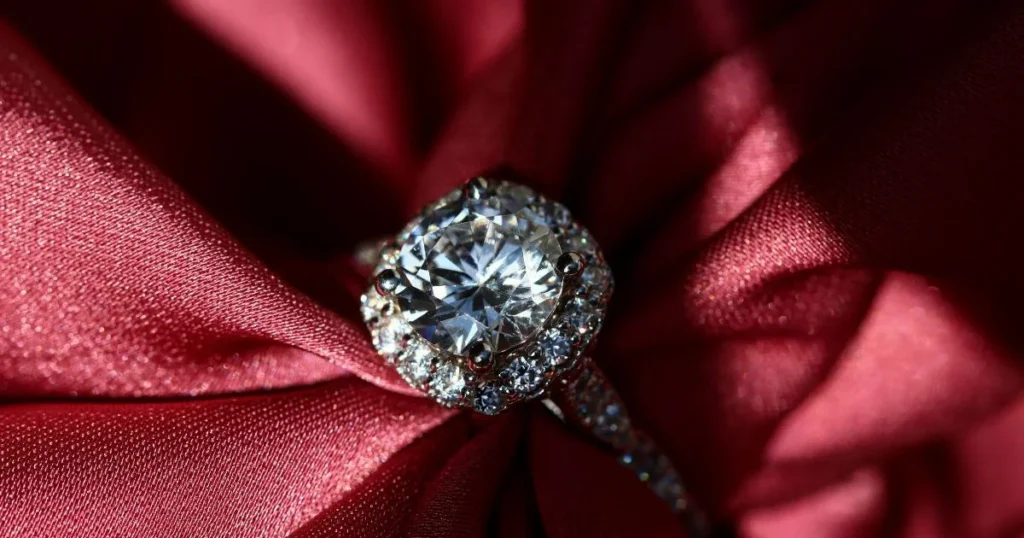
For an engagement ring, the choice between natural and lab-grown diamonds ultimately comes down to what you want the stone to represent. Natural diamonds carry geological rarity and long-term value considerations. Lab-grown diamonds offer significantly more visual stone for the same budget. Both make beautiful, durable engagement rings — but the right choice depends on your priorities, not on a blanket recommendation.
According to The Knot’s 2024 Real Weddings Study, the average US engagement ring spend was approximately $5,800 — and a growing percentage of that market is exploring lab-grown options specifically for the size advantage at that price point.
But an engagement ring is not just a consumer purchase. For many couples, it’s the first object in what will become a family heirloom — passed to children, worn at milestone moments, eventually evaluated for insurance and estate purposes. In that context, the considerations extend beyond the purchase-day experience.
A quick framework for your decision:
Choose a natural diamond if:
- The geological origin and rarity of the stone is meaningful to you
- You want the stone to have long-term resale or trade-in potential
- You’re considering a colored natural diamond (fancy yellow, pink) for rarity and investment
- The piece is intended as a family heirloom
Choose a lab-grown diamond if:
- Maximum carat size within your budget is the priority
- You plan to upgrade or change the stone within 5–10 years
- The visual impact of the diamond matters more than its origin
- You are not concerned with future resale value
Conclusion
The natural vs. lab-grown diamond question doesn’t have a universal answer — but it does have a right answer for you, and 2026 is an excellent time to find it, because information has never been more accessible and options have never been more varied.
Here’s what to take with you:
- Lab-grown diamonds offer dramatic savings — 60–85% less per carat — but with significantly reduced resale value as the market matures.
- Natural diamonds carry geological rarity that no manufacturing process can replicate, and that scarcity continues to support long-term value, particularly in exceptional or colored stones.
- GIA certification applies to both — always request it, always verify the report number independently before purchase.
- The right choice is personal — shaped by what you want the stone to mean, how long you plan to keep it, and what story you want it to tell.
Whether you’re drawn to a natural diamond for its ancient origin or a lab-grown stone for its brilliance at a fraction of the cost, our team at DiamondsNColors in Las Vegas is here to guide you — without pressure, without judgment, and with access to some of the finest certified stones available in the USA. Book a private consultation or explore our full diamond jewelry collection online.
For your next read, explore these related guides on our blog:
- Lab-Grown Diamond Resale Value: What the Market Data Actually Shows
- Fancy Colored Diamonds — Blue, Green, and Pink: Rarity, Grading, and Value in 2026
FAQ SECTION
Are lab-grown diamonds worth buying in 2026, or have prices dropped too much?
Lab-grown diamonds remain a worthwhile choice for buyers prioritizing size and visual impact over resale value. Prices have fallen 80%+ since 2020 (Rapaport Diamond Report), which means more stone per dollar — but resale value has dropped correspondingly. If you plan to keep the piece and aren’t concerned with future trade-in potential, a lab-grown diamond offers exceptional value in 2026.
What is the resale value difference between natural and lab-grown diamonds?
Natural diamonds retain moderate resale value, particularly GIA-certified stones with strong cut, color, and clarity grades. Lab-grown diamond resale value has declined sharply as production scales globally — most retailers offer minimal trade-in credit for lab-grown stones. For buyers concerned with the diamond resale value comparison, natural stones present a meaningfully stronger long-term case in the current market.
Can a jeweler tell the difference between a natural and lab-grown diamond just by looking?
No. Natural and lab-grown diamonds are chemically and optically identical — even trained gemologists cannot distinguish them by eye or standard loupe inspection. Detection requires specialized equipment such as a DiamondView or GCAL spectroscopy analysis. The GIA grading report accompanying the stone is the clearest and most reliable way to identify origin.
Does GIA certify lab-grown diamonds the same way as natural diamonds?
The GIA grades lab-grown diamonds using the same 4Cs framework — cut, color, clarity, and carat weight — applied to natural diamonds. Lab-grown GIA reports are clearly labeled as such and indicate the growth method (HPHT or CVD). Both report types are considered reliable, authoritative grading documents and are strongly recommended for any diamond purchase in the USA.
Is a lab-grown diamond a good choice for an engagement ring in Las Vegas?
A lab-grown diamond makes a visually stunning engagement ring and is a practical choice for buyers who want maximum carat size within a defined budget. In the natural vs lab-grown diamonds 2026 conversation, the key consideration is intent: if the ring is meant as a long-term heirloom or investment, a natural diamond offers stronger value retention. For couples focused on beauty and size today, lab-grown is a confident option.
What should I look for when buying a natural diamond in the USA in 2026?
Prioritize GIA or AGS certification and verify the report number independently at GIA.edu before purchasing. For round brilliants, cut quality — ideally Excellent — matters more than any other factor for sparkle. Request origin documentation when available, and ask your jeweler about fluorescence, which can affect appearance in different lighting. Working with a certified, experienced US jeweler ensures full transparency throughout the purchase.