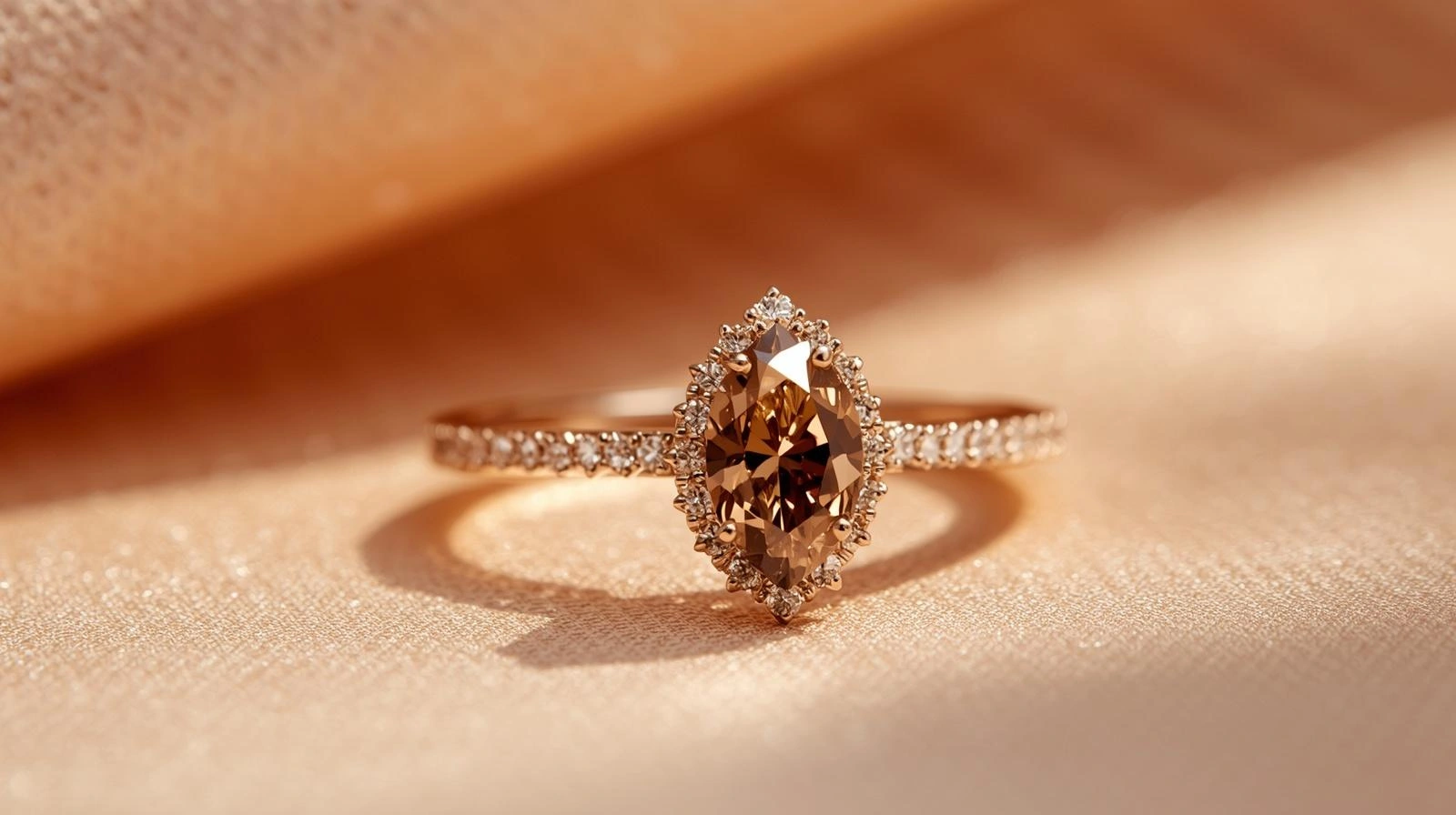
Have you ever wondered why so many luxury buyers now ask for brown stones instead of icy‑white diamonds? Imagine walking into a Las Vegas jewelry salon and hearing champagne diamonds mentioned more often than classic white brilliants that’s now reality for many brides and collectors this year.
In the past, brown diamonds were overlooked, considered industrial rough or low‑tier gems. But starting in the 1980s, marketers rebranded these stones as “champagne,” “cognac,” and “chocolate,” transforming their story and desirability. Today, the colored diamonds trend continues to grow, with warm hues becoming symbols of individuality and understated luxury. You’re here for answers — not hype — and this brown diamonds guide delivers expert insights, industry trends, actionable buying advice, and what this shift means for consumers and vendors alike.
This full guide reveals exactly what champagne diamonds are, why they matter now more than ever in 2026, and how to navigate authenticity, value, and style — whether you’re a jeweler, marketer, or buyer.
What exactly are champagne diamonds and how do they differ from other colored stones?
Champagne diamonds are naturally brown diamonds with warm golden to amber hues, earning their name from the resemblance to the color of fine bubbly. Unlike colorless diamonds that are graded on the traditional D–Z scale, champagne diamond fall into the fancy color categories often labeled as fancy light brown, fancy brown, or fancy dark brown on a grading report.
Their color comes from natural crystal lattice distortions and trace nitrogen, which alter how light passes through the stone. What sets champagne diamond apart is their warmth and personality — the brown tone softens the brilliance and lends a distinctive earthy elegance compared to icy colorless stones.
A major misconception: “champagne” isn’t an official gemological term; it’s a marketing label used to help buyers visualize the hue. So when evaluating any fancy colored diamond, always check the GIA or equivalent certificate that specifies the actual color grade.
Pro Tip: When comparing stones, hold them next to white diamonds in both cool and warm lighting. The warm undertone is what gives champagne diamond their sought‑after character.
Why are brown diamonds suddenly trending in 2026?
The colored diamonds trend this year isn’t a fleeting fad — it’s the result of shifting consumer values and changing market dynamics. Natural colored diamonds, including brown, champagne, cognac, and even pink and yellow stones, have been increasing in demand worldwide, with some markets noting a compound annual growth rate of 5.7% over the last two decades for fancy colors.
Several forces are at play:
- Desire for uniqueness. As lab‑grown diamonds flood the market with perfect white stones, natural colored diamonds like champagne stand out as distinctive and personal.
- Cultural and design trends. High‑end designers and editorial features spotlight earthy tones and warm palettes, aligning with broader aesthetics in jewelry and fashion.
- Affordability + relative rarity. Compared to rare pink or blue fancy colors, champagne diamond are more accessible but still offer an exotic appeal vs. traditional white diamonds.
Example: In luxury bridal showcases for 2026, designers are pairing champagne stones with sculptural gold bands and bezel settings, giving engagement rings a modern, soulful warmth that tells a story beyond tradition.
Expert Insight: Jewelers report that clients increasingly request stones that reflect personality over perfection — and warm‑toned diamonds fit that bill.
Custom engagement rings, luxury colored gemstones, and diamond creations—crafted in Las Vegas by expert designers with 30+ years of experience. Call us now to make your vision a reality!Your Dream Jewelry, Designed Just for You!
Are champagne diamond a good investment compared to colorless or other fancy colors?
From a pure monetary standpoint, champagne diamond historically cost less than top‑tier colorless stones and rarer fancy colors like blue or pink. That said, the rising interest in colored diamonds is boosting demand and slowly strengthening value retention — especially for high‑quality stones with deep, rich hues.
Real World Check:
- A 1‑carat champagne diamond in an attractive medium brown hue typically cost significantly less than a comparable colorless diamond in the early 2020s.
- But in markets globally, fancy colored diamonds have shown consistent price growth due to limited supply after the closure of some major mines.
For buyers focused on resale or investment, traditional price drivers still matter: color depth, clarity, cut, and certification. However, consider this:
- Champagne diamond can outperform lesser colorless stones in appetite among niche collectors.
- Their uniqueness can command premium settings and bespoke designs.
In Las Vegas, upscale jewelers increasingly feature champagne diamond as part of signature collections, marking them as both fashion statements and potential keepsakes. Always insist on reputable certification from GIA or equivalent, to protect value and authenticity.
How should you evaluate and grade a champagne diamond before buying?
Assessing a champagne diamond requires a slightly different lens than a standard white diamond. Prioritize these five buyer tests:
1. Certification
Ensure the stone has a lab report (GIA, IGI, AGS) that clearly states its fancy color grade. Marketing names don’t appear on certificates.
2. Color intensity
Hue (specific tone), saturation (depth), and tone (light vs. dark) all affect how the diamond looks and its price. Pro buyers prefer even, rich tones without muddy or dull areas.
3. Cut quality
A great cut maximizes brilliance — even in a brown stone — helping balance color and sparkle.
4. Clarity
Aim for eye‑clean where possible. Minor inclusions may be acceptable given the warmth of the stone.
5. Light performance
Always evaluate stones in multiple light conditions to see how color plays under natural and artificial light.
Pro Tip: Bring a neutral color background when inspecting a stone in person — warm tones can shift when placed next to bright metals.
Brown diamonds vs. other colored diamonds: what’s the difference?
Brown diamonds are part of the larger universe of fancy colored diamonds — a category that also includes yellow, pink, blue, and green stones. What sets them apart is:
- Prevalence: Brown diamonds are among the most common fancy colors, making them more accessible than rare hues like blue or pink.
- Aesthetics: Their earthy warmth offers a subtle, elegant contrast to cooler tones.
- Value dynamics: While rare colored diamonds appreciate faster due to scarcity, champagne diamond balance price and luxury appeal.
Comparison Table: Fancy Colored Diamond Traits
| Diamond Type | Typical Price Range | Rarity Level | Aesthetic Feel |
|---|---|---|---|
| Champagne Brown | Moderate | Common | Earthy, warm |
| Yellow Fancy | Higher | Less common | Bright, vibrant |
| Pink Fancy | Premium | Rare | Romantic, bold |
| Blue Fancy | Ultra‑premium | Very rare | Cool, striking |
This alignment explains why many buyers view brown/cognac/champagne as the accessible entrée to colored diamond luxury.
5 expert tips for buying champagne diamond
- Always verify certification. Names like “champagne” are descriptive, not official grades.
- See the stone firsthand. Warm hues can look dramatically different in daylight vs showroom lighting.
- Match metals wisely. Yellow and rose gold enhance warm tones; platinum may mute them.
- Think beyond basics. Set champagne diamond in unique shapes (pear, cushion, radiant) for dramatic effect.
- Consider persona and style. Trend data shows younger buyers are choosing colored stones to express individuality.
Are there Las Vegas jewelry regulations buyers should know?
Selling fine jewelry, including champagne diamond, in Las Vegas means complying with state and federal guidelines:
- Disclosure laws: Sellers must disclose treatments, enhancements, and origins of gemstones.
- Licensing: Retailers must operate with appropriate Nevada business jewelry licenses.
- Consumer protections: Clear refund and warranty policies are legally required in many retail contracts.
Always ask for written documentation — including treatment history — before purchase.
Call to Action:
Are you ready to find the perfect engagement ring that fits your unique style? Explore our collection of oval and emerald-cut diamonds to discover the one that best suits you.
What Our Clients Are Saying
At DiamondNColors, we take pride in delivering exceptional service and exquisite jewelry. From diamond rings, engagement rings, and bracelets to gemstone pieces and more, our clients’ experiences speak for themselves. Explore our genuine testimonials to see how we bring elegance and quality to every piece, and share your own feedback here.
Conclusion
The brown diamonds guide in 2026 isn’t just about what champagne diamond is it’s about understanding why they’re redefining luxury. Consumers and collectors now prize stones with personality, warmth, and authenticity over cookie‑cutter perfection. The colored diamonds trend shows no sign of slowing, especially as consumers seek meaningful alternatives to traditional white diamonds and lab‑grown options.
Whether you’re buying for love, investment, or personal style, knowing how to evaluate, price, and choose a champagne diamond gives you confidence and clarity. Use this guide to navigate the market with expert precision.
FAQ
1. What makes a champagne diamond different from a brown diamond?
Champagne diamonds are a type of brown diamond with warm golden hues. The term is descriptive, not official, but helps convey the color’s warmth. Always check certified color grades like fancy light brown.
2. Are champagne diamonds rare?
No — brown diamonds are among the most common fancy color diamonds. Their appeal comes from aesthetics and design trends rather than scarcity.
3. Do champagne diamonds hold value?
They may not appreciate as fast as ultra‑rare fancy colors, but with rising trend demand and limited high‑quality supply, certain stones can maintain good value over time.
4. Can you get lab‑grown champagne diamonds?
Yes. Lab‑grown fancy colored diamonds, including light brown hues, are available but require careful grading and disclosure.
5. What setting best complements champagne diamonds?
Yellow or rose gold enhances the warm tones; bezel and halo settings emphasize color and create visual contrast.
6. Are champagne diamonds ethically sound?
Ask for certifications and disclosures about sourcing. Many reputable sellers adhere to ethical, conflict‑free sourcing standards.
7. Why are champagne diamonds trending now?
They align with broader preferences for individuality, natural beauty, and a move away from homogenous luxury styles.