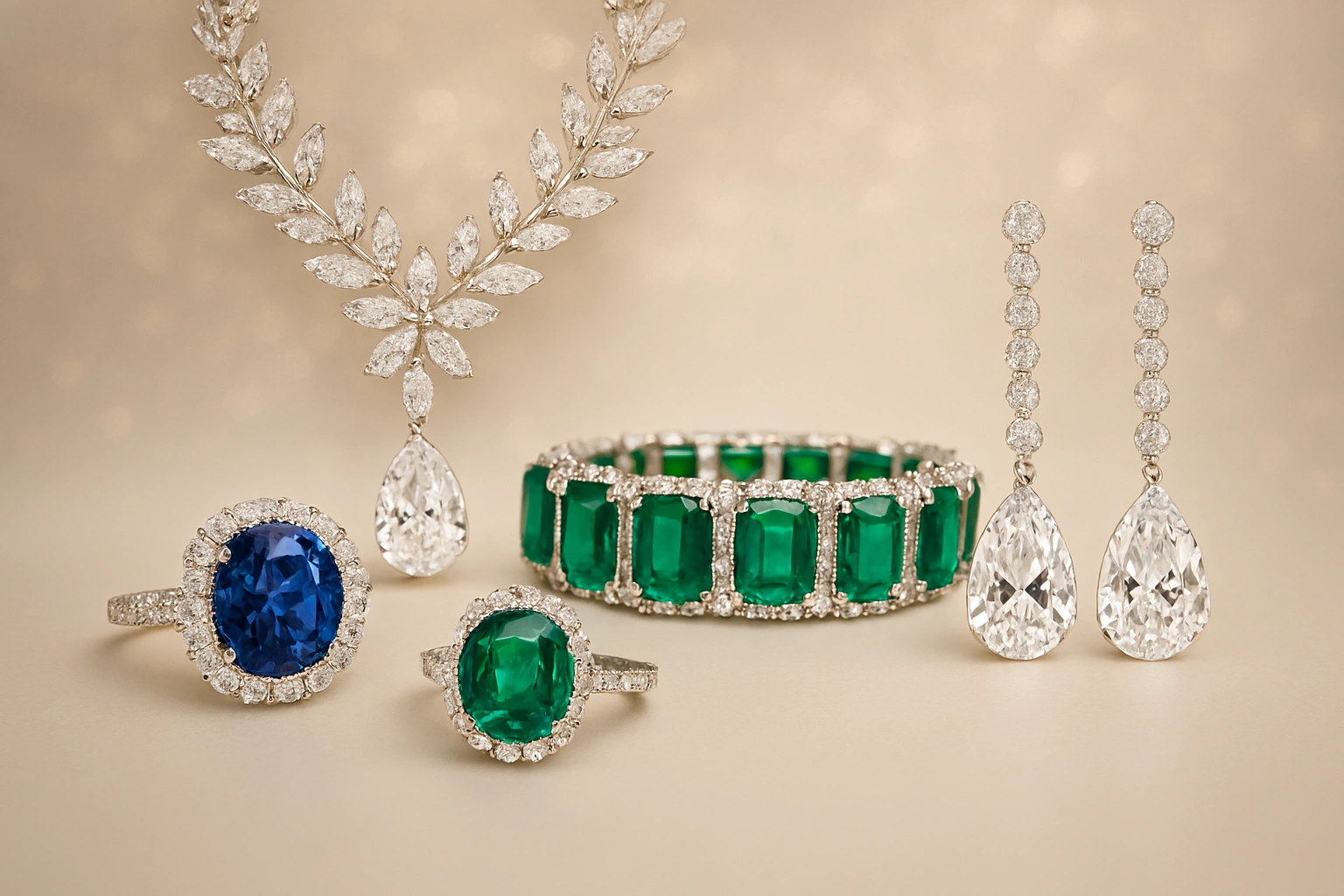
Over the past decade, the luxury jewelry world has evolved at an impressive pace. High jewelry collections is no longer defined solely by diamonds, rubies, or emeralds. Today, brands are increasingly exploring rare and vibrant gemstones, expanding their offerings to meet changing consumer tastes. This shift reflects more than just a trend—it’s a strategic response to the desire for individuality, sustainability, and meaningful luxury experiences.
Collectors now want jewelry that tells a story, not just sparkles. As a result, luxury jewelry brands is embracing colored gemstones, ethically sourced stones, and innovative designs that push traditional boundaries. In this article, we’ll explore why this expansion is happening, the top gemstone trends, and what it means for both brands and buyers in the modern luxury market.Personally, I have always felt that when jewelry comes with a story, every piece feels even more special.
Custom engagement rings, luxury colored gemstones, and diamond creations—crafted in Las Vegas by expert designers with 30+ years of experience. Call us now to make your vision a reality!Your Dream Jewelry, Designed Just for You!
Why Are High Jewelry Brands Expanding Their Gemstone Range?
High luxury jewelry brands are broadening their gemstone selection for several key reasons. At the forefront is changing consumer preferences. Modern buyers are no longer satisfied with standard diamonds or conventional colored stones—they want pieces that reflect their personality and values.
Luxury consumers are seeking exclusivity, uniqueness, and personal meaning in every piece. This has prompted brands to experiment with gemstones that were once considered unconventional, such as Paraiba tourmaline, Tanzanite, Spinel, Moonstone, and Alexandrite. By incorporating these rare and vibrant stones, brands can cater to a wider audience and appeal to collectors looking for something distinctive.Personally, I’ve always been drawn to pieces that truly reflect your personality, which is why I also enjoy exploring unique gemstones myself.
Pro Tip: When expanding gemstone ranges, ensure that new stones align with your brand’s identity. Striking the right balance between innovation and tradition is essential to maintain trust and prestige in the fine jewelry market.
How Consumer Preferences Are Shaping the Luxury Jewelry Market
Today’s luxury buyersis more informed and discerning than ever before. Beyond wealth and status, they seek jewelry that communicates personal stories, reflects ethical values, and showcases originality.
Sustainability has become a key factor. Ethical sourcing, transparency in gemstone origins, and environmentally conscious production methods now influence purchasing decisions. A 2023 survey found that 62% of luxury jewelry buyers consider the ethical sourcing of gemstones before making a purchase.
Highly jewelry brands are responding by offering stones from certified mines, lab-created alternatives, and conflict-free sources. Collectors increasingly prioritize meaning and provenance, not just carat weight or clarity. As one jeweler put it, “People want jewelry that mirrors who they are and the values they hold dear.”
Top Gemstone Trends in Highly Jewelry
Luxury jewelry is no longer just about diamonds and the classic “big three” colored stones. Several gemstone trends are shaping the industry today:
Colored Gemstones
Luxury brands is embracing an expanded palette of colored stones, including amethyst, aquamarine, garnet, and peridot. Designers use these stones to create striking contrasts and to infuse personality into their pieces. Mixing unexpected colors allows collectors to express individuality while remaining rooted in elegance.I believe these rare and colorful stones is not only beautiful, but their uniqueness also brings a distinct charm to any collection.
Rare Stones
Rare gemstones like Paraiba tourmaline, Tanzanite, and Jadeite is in high demand. Paraiba tourmaline, known for its neon blue-green glow, is especially coveted for its rarity and collector appeal. Tanzanite’s deep violet-blue hue offers an alternative to traditional sapphires, while Jadeite continues to command record prices in auction houses.
Opals and Lab-Grown Diamonds
Opals, with their shifting play-of-color, are increasingly featured in contemporary gemstone jewelry pieces. Lab-grown diamonds are also gaining traction, offering ethical and environmentally friendly alternatives without sacrificing brilliance. These options enable brands to combine luxury with sustainability, appealing to conscious consumers.
Pro Tip: Designers who experiment with mixing stones—such as pairing sapphire with moonstone or ruby with emerald—create visually compelling gemstone jewelry that resonates with both traditional and modern buyers.
Benefits of Expanding Gemstone Collections
Expanding gemstone ranges provides multiple advantages for fine jewelry brands:
-
Diversification: A wider selection allows brands to appeal to a broader audience. Brands previously focused on diamonds can now cater to collectors seeking unique colored stones.
-
Exclusivity: Rare and unusual gemstones enhance the sense of luxury and exclusivity, making luxury jewelry pieces more desirable.
-
Revenue Growth: More options enable brands to create products at different price points, from ultra-high-end masterpieces to more accessible luxury items.
For instance, Bulgari’s 2023 Serpenti Viper collection combined diamonds, emeralds, and tanzanites, showcasing how rare stones can complement traditional choices while appealing to collectors seeking originality.
Sustainability and Ethical Sourcing
Sustainability is no longer optional in luxury jewelry—it’s essential. Consumers increasingly demand transparency regarding gemstone origins and the environmental impact of mining. Ethically sourced gemstones and lab-grown alternatives are becoming standard in luxury collections.
Mining for precious stones like emeralds and sapphires can be environmentally damaging, which is why brands are turning to recycled or certified conflict-free stones. Transparency builds trust, enhances the consumer experience, and aligns with the values of modern collectors.
Stat: 74% of luxury consumers say they would switch brands for one demonstrating commitment to sustainability.
“Ethical sourcing isn’t just a checkbox—it’s part of the luxury story. A gemstone’s history now matters as much as its sparkle.”
Marketing Expanded Gemstone Ranges
Effective marketing is key when introducing new gemstones. Gemstones jewelry brands use storytelling, influencer collaborations, and social media to highlight the uniqueness of their offerings.
For example, Tiffany & Co.’s Tiffany Blue Book collection emphasizes the stories behind each stone, from its ancient origins to the careful processes used in cutting and setting. I’ve always appreciated that when I learn the story behind a piece, its value feels even more meaningful to me.
Advanced digital tools like augmented reality (AR) allow buyers to virtually try on pieces, making the shopping experience immersive and personal.
Tip: Connect with buyers through the story of each gemstone. Consumers value narrative as much as the stone itself, which strengthens brand loyalty and engagement.
Challenges for High luxury Jewelry Brands
While expanding gemstone ranges offers opportunities, it also presents challenges:
-
Maintaining Quality: Some new stones are more delicate and require precise cutting and setting to preserve their integrity.
-
Sourcing Rare Stones: Finding ethical, high-quality sources for rare gemstones can be complex and costly.
-
Balancing Innovation with Tradition: Brands must innovate without alienating traditional collectors who value timeless luxury.
Every new gemstone has its learning curve, but the reward is a more dynamic and expressive high luxury jewelry collection.
Conclusion
The expansion of gemstone ranges in high jewelry represents more than a passing trend—it reflects evolving consumer expectations, sustainability awareness, and a desire for uniqueness. By embracing rare, colored, and ethically sourced stones, brands are setting new standards in the luxury jewelry market.
High luxury jewelry are no longer solely about clarity, carat weight, or conventional beauty. It’s about personality, story, and conscious choices. Collectors now value rarity, ethical sourcing, and the emotional significance of each gemstone. Brands that adapt to these demands will thrive, offering jewelry that is both luxurious and meaningful.
Exploring a wider spectrum of gemstones allows collectors and designers alike to express creativity, values, and individuality—creating luxuryjewelry that resonates for generations.
FAQ
1. Why are high jewelry brands using alternative gemstones?
High jewelry brands diversify with rare and colored gemstones to cater to buyers seeking uniqueness and ethical sourcing, ensuring their collections stay relevant and engaging.
2. Are colored gemstones more expensive than diamonds?
While some rare colored gemstones like Paraiba tourmaline or Tanzanite are pricey, diamonds generally have higher average market prices. High jewelry buyers often value uniqueness and color appeal.
3. How can I find ethically sourced gemstones for my high jewelry business?
Look for certifications from the Responsible Jewellery Council or Fairmined, and work with suppliers transparent about sourcing and environmental impact.
4. What are the benefits of offering lab-grown diamonds in high jewelry?
Lab-grown diamonds are sustainable, eco-friendly alternatives that maintain the same quality and beauty, appealing to ethical collectors of high jewelry.
5. How do gemstone trends impact the future of high jewelry?
Trends introduce rare colors and innovative stones, pushing high jewelry brands to create unique, personalized, and meaningful collections.
6. Can mixed-gemstone high jewelry pieces appeal to traditional collectors?
Absolutely. When thoughtfully designed, combining gemstones creates elegant, visually striking pieces that appeal to both modern and classic tastes.
7. How is high jewelry different from fine jewelry regarding gemstones?
High jewelry features exceptionally rare, high-quality stones with intricate craftsmanship and limited production, distinguishing it from fine jewelry.