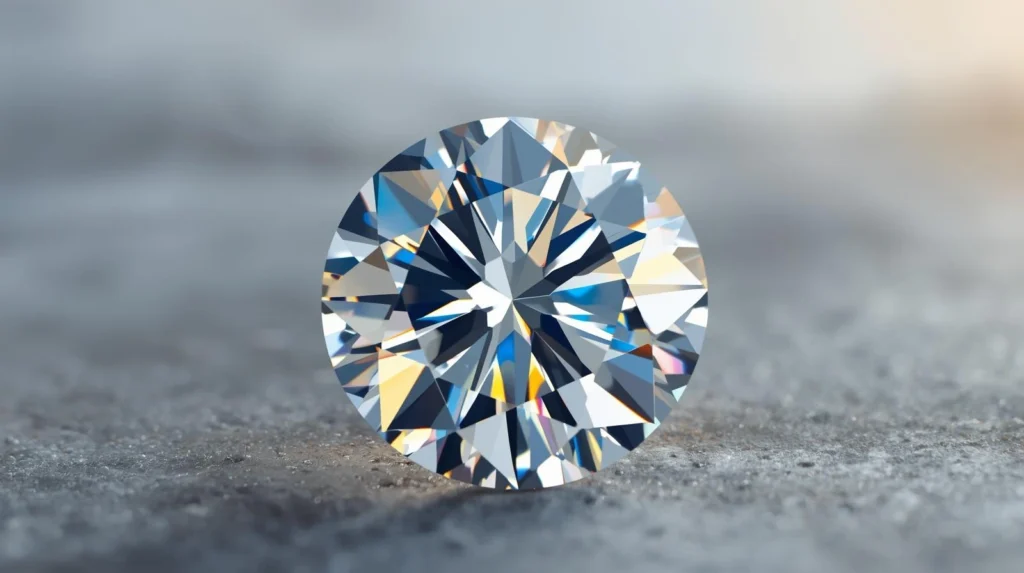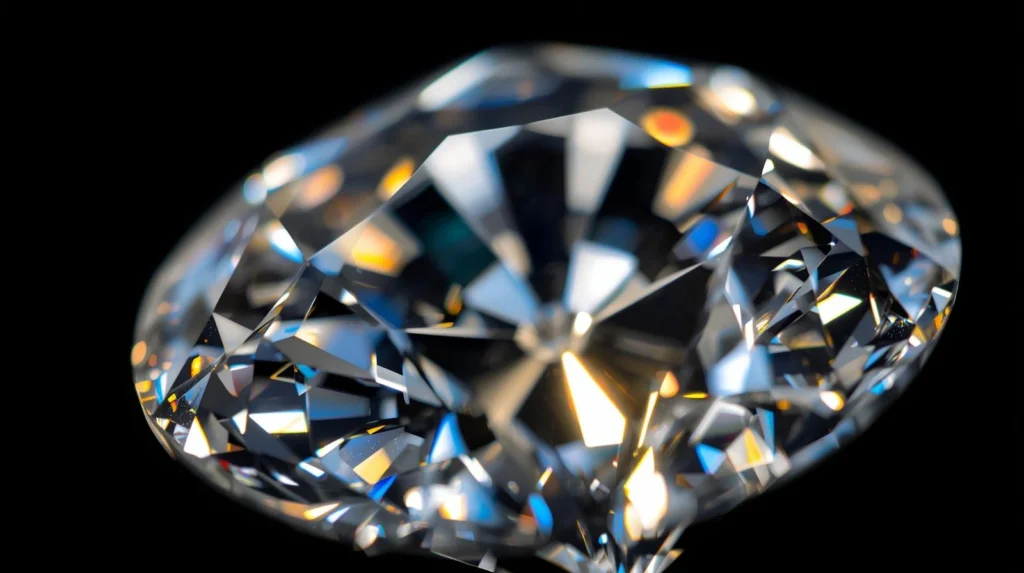
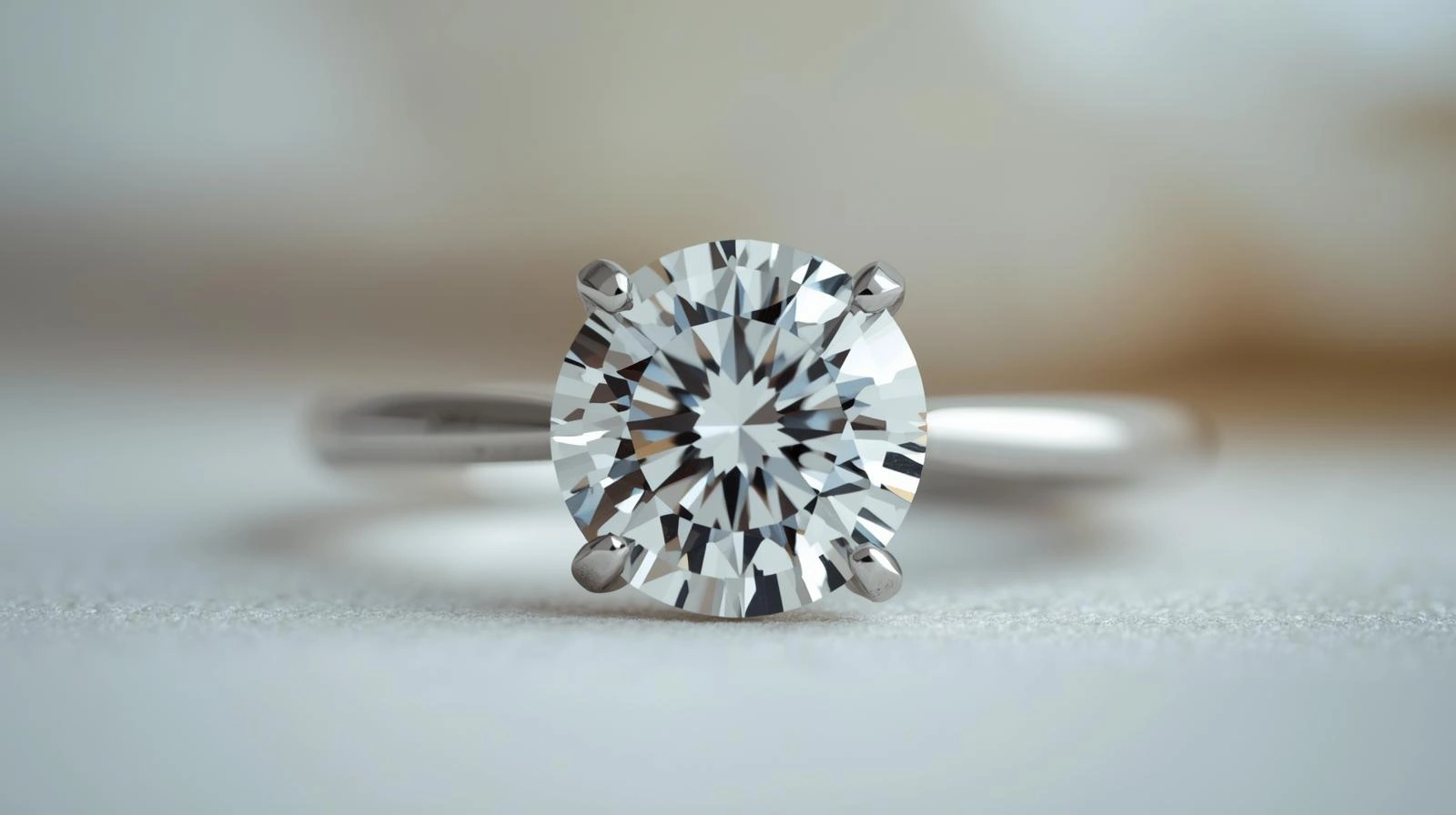
One question that frequently causes reluctance when choosing a diamond for a white gold ring is if a G color diamond is actually white enough for white gold.
Under showroom lighting, the majority of diamonds appear dazzling and identical at first glance. Subtle variations start to count, though, once you start comparing grades, particularly in a white gold setting. Choosing a diamond that might look a little warmer or less brilliant against the cold white gold tone is a common concern for buyers.
A Color Diamond sits in the near-colorless range of the GIA scale. It is positioned carefully between premium colorless diamonds and slightly tinted grades. G color diamonds are looked very beautiful.The important question is not only whether it looks white — but whether it looks white in real-life conditions, over time, and in today’s market environment where pricing and value matter more than ever.
This guide will walk you through the visual impact, financial reasoning, market volatility context, and practical decision-making factors behind choosing the right diamond color for white gold rings.
Your Dream Jewelry, Designed Just for You!
Custom engagement rings, luxury colored gemstones, and diamond creations—crafted in Las Vegas by expert designers with 30+ years of experience. Call us now to make your vision a reality!
(702) 773-1747Understanding Diamond Color in Practical Terms
Diamond color is graded from D to Z by the Gemological Institute of America (GIA).
- D–F: Colorless
- G–J: Near Colorless
- K–Z: Noticeable tint
At the top of the near-colorless range is a G-grade. In contrast to D or E stones, a small warmth may be discernible under magnification in a laboratory setting. However, grading lamps are not used to inspect jewelry found in the real world. It is worn for family get-togethers, evening activities, business lighting, and natural sunshine.
Most buyers cannot visually distinguish a G from an F or even E without side-by-side comparison under professional lighting.
That distinction becomes even less noticeable once the stone is mounted in a white gold setting.
G Color Diamond
Yellow gold and white alloys are combined to form white gold, which is then usually plated with rhodium to increase its brilliance. The end effect is a cool-toned, shiny metal that highlights glimmer.
A common buyer’s worry is straightforward:
Will the chilly tone of white gold contrast with the modest warmth of a nearly colorless diamond?
In practical observation:
- A well-cut G-grade stone appears bright and crisp.
- The rhodium finish of white gold enhances perceived whiteness.
- Human eyes focus more on brilliance and fire than microscopic color traces.
Color differences become even less noticeable in balanced lighting since the diamond reflects the brightness of the surroundings.
The match makes sense from the perspective of visual harmony. In a G-grade stone, the white metal does not overstate warmth. Instead, when the cut quality are strong, it frequently improves overall brilliance.
Why Many Buyers Choose This Grade
The decision to select this grade is rarely about compromise. It is about balance.
1. Visual Performance
Most people see a bright, white diamond.
2. Financial Efficiency
There are a measurable price jump between F and G grades. In volatile diamond markets, this gap can widen. Buyers who choose near-colorless grades often redirect savings toward:
- Better cut quality
- Larger carat weight
- Higher clarity
- Custom design elements
3. Market Volatility Considerations
Diamond pricing has experienced fluctuations in recent years due to:
- Supply chain disruptions
- Shifts in global demand
- Lab-grown diamond competition
- Currency movements
In uncertain markets, buyers increasingly prioritize value retention and intelligent spending rather than paying premium solely for microscopic distinctions.
Choosing wisely in the color range is part of financial awareness — not downgrading quality.
Comparing G to Higher and Lower Grades
Here is a practical breakdown:
| Color Grade | Visual Difference (Mounted) | Price Impact | Who It Suits |
|---|---|---|---|
| D–F | Laboratory colorless | Highest | Buyers seeking top-tier classification |
| G | Near-colorless, visually white | Moderate | Value-focused quality buyers |
| H–I | Slight warmth detectable | Lower | Budget-conscious buyers |
| J+ | Visible tint in white metals | Lowest | Size-over-color buyers |
When mounted in white gold, most observers will not detect a difference between F and G without technical comparison tools.
However, the financial difference can be significant.
Does Cut Matter More Than Color?
Yes — in real-world wear.
Diamond cut determines:
- Light return
- Brilliance
- Sparkle
- Fire
A D-grade diamond with poor cutting can seem lifeless.
When cut properly, an almost colorless stone can seem dazzlingly bright.
Customers occasionally place too much emphasis on color while undervaluing cut accuracy.
More than faint color grading variations, sparkle controls perception in white gold settings.
Human Perspective: Real Buying Psychology
When they first start the purchasing process, many couples try to get the “highest grade possible.” Rather than practical necessity, this inclination frequently stems from emotional significance.
But after reviewing stones side by side:
- They notice minimal visual difference.
- They reconsider budget allocation.
- They prioritize design, comfort, and longevity.
A thoughtful purchase considers not only how a ring looks today — but how it feels financially and emotionally over decades.
Market Awareness & Pricing Stability
In periods of market uncertainty:
- Premium color grades can experience sharper price swings.
- Near-colorless stones often maintain stable demand.
- Buyers seeking liquidity awareness gravitate toward balanced grades.
Historical context shows that mid-premium grades often maintain consistent resale desirability due to broader buyer appeal.
This does not mean buying jewelry purely for investment — but awareness matters.
White Gold Maintenance Factor
White gold is usually rhodium plated. Over time:
- Plating may wear.
- Slight yellow undertones of gold alloy may appear.
- Replating restores brightness.
Because of this, the diamond’s brightness often remains more consistent than the metal’s finish over years.
In practical wear, the stone continues to look bright even as metal maintenance cycles occur.
When Should You Consider Higher Than G?
You might lean toward D–F if:
- You prefer technical perfection.
- You enjoy owning top classification.
- Budget flexibility allows it comfortably.
The diamond will be compared frequently under professional lighting.
However, for everyday wear in white gold, most buyers find near-colorless grades entirely satisfactory.
When Might You Go Lower?
H or I can still appear white in many cases. But in larger carat sizes, warmth becomes slightly more noticeable in white metals.
Size influences perception.
The larger the stone, the easier it is to detect subtle color differences.
Long-Term Satisfaction Considerations
A ring is often worn daily. Over time:
- Emotional value grows.
- Perfection standards soften.
- Sparkle and symbolism matter more than laboratory labels.
Many owners who choose this near-colorless grade report long-term satisfaction because they balanced beauty with practicality.
Conlcusion
Is a G-colored diamond sufficiently white for white gold rings, then? The answer is yes in the majority of real-world circumstances. G color diamonds are white for white gold rings and engagement rings.To the unaided eye, it appears bright, balanced, and almost colorless when set in white gold. Once the stone is mounted and examined in normal illumination, any faint warmth that could occur under laboratory grading settings is usually undetectable.
Beyond looks, a G Color Diamond provides a careful balancing act between aesthetics and economic sensibility. Selecting a grade that offers powerful visual performance without needless premium cost makes sense in volatile markets where supply and demand can cause price fluctuations for diamonds.In everyday use, the distinction between a well-cut G stone and a higher color grade is negligible, particularly when the stone is set in white gold, which intensifies brilliance.
FAQs
1. Is a G Color Diamond considered good for white gold rings?
Yes, it is considered an excellent choice for white gold settings. A G color grade appears near-colorless once mounted, and most buyers cannot distinguish it from higher grades without magnification.
2. Can you see yellow in a G Color Diamond set in white gold?
In normal lighting, a G Color Diamond does not appear yellow in white gold. The cool tone of the metal enhances brightness, and G Color Diamond typically looks crisp and clean unless compared side-by-side with D-grade stones under lab lighting.
3. Is G color better than H for white gold settings?
A G grade typically shows slightly less warmth than an H grade, particularly in larger carat sizes. While both can look bright in white gold, G offers a bit more color consistency, especially for buyers who are sensitive to subtle tone differences.
4. Does a G Color Diamond hold value well?
Diamonds are not guaranteed investments, but near-colorless grades like this one maintain steady demand in the market. Because it balances appearance and pricing, it tends to remain a popular and stable category among buyers.
5. Should I choose G or D color for my ring?
The decision depends largely on budget and personal preference. Visually, most people cannot detect a major difference once the stone is mounted. Choosing G color diamond instead of D often allows buyers to allocate more budget toward cut quality or carat size without sacrificing noticeable beauty.