Have you ever walked into a jewelry store and been faced with a dazzling array of diamonds, each one seemingly more expensive than the last? You might have found yourself wondering, “Is a diamond truly worth its price?” You’re not alone—many buyers face this same dilemma. The price of diamonds can range from a few hundred dollars to tens of thousands, but how do you know if you’re paying for quality, rarity, or just the brand?
In this post, we’ll explore everything you need to know to assess whether a diamond is truly worth its price tag. Whether you’re shopping for an engagement ring, an investment, or simply a beautiful piece of jewelry, understanding diamond pricing is essential.
Your Dream Jewelry, Designed Just for You!
Custom engagement rings, luxury colored gemstones, and diamond creations—crafted in Las Vegas by expert designers with 30+ years of experience. Call us now to make your vision a reality!
(702) 773-1747What Determines If a Diamond Is Worth Its Price?
Diamonds are priced based on several key factors that determine whether they’re worth their price. When wondering if a diamond is worth its price, the 4 Cs (Carat, Cut, Clarity, and Color) are essential to evaluating its value. Let’s break each factor down:
1. Carat Weight: Is a Bigger Diamond Always Worth More?
Carat weight is one of the most well-known factors in determining a diamond’s value. Larger diamonds are often more expensive, but size alone doesn’t guarantee quality. A larger diamond with poor cut, clarity, or color might be less valuable than a smaller, better-quality stone.
For example, a 2-carat diamond with an excellent cut, near-perfect clarity, and a high color grade will often cost more than a 5-carat diamond with a mediocre cut, visible inclusions, and a yellowish tint. So, when considering if a diamond is worth its price, prioritize overall quality over size.
2. Diamond Cut: How It Affects Worth and Price
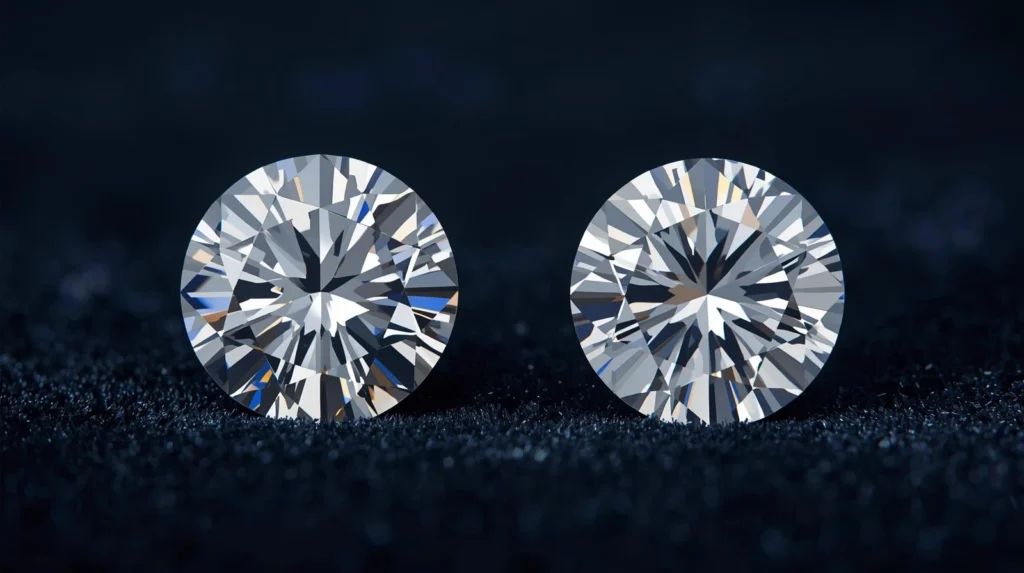
When assessing whether a diamond is worth its price, cut should always be at the top of your priority list. A poorly cut diamond will appear dull, no matter how large it is. On the other hand, a well-cut diamond can appear more dazzling, even if it’s smaller in size.
The cut grade of a diamond is typically divided into categories such as Excellent, Very Good, Good, Fair, and Poor. Diamonds with higher cut grades tend to be more expensive due to their enhanced visual appeal. Always prioritize cut over carat weight if you are seeking beauty that truly pops.
3. Clarity: Flawless vs. Imperfect
Clarity refers to the presence of internal or external flaws, also known as inclusions and blemishes. While the term “flawless” may sound appealing, most diamonds have tiny imperfections that are invisible to the naked eye. The clarity scale ranges from Flawless (no internal flaws visible under 10x magnification) to Included (inclusions visible without magnification).
Diamonds with higher clarity grades typically carry a higher price tag. However, diamonds that are one or two grades lower than Flawless can still look stunning, especially when set in jewelry, offering a more affordable option without sacrificing appearance.
4. Color: The Subtle Shades of Diamonds
The color of a diamond is graded on a scale from D (colorless) to Z (light yellow or brown). Colorless diamonds are typically more expensive because they allow more light to pass through, creating a brighter and more desirable sparkle. However, diamonds with a slight hint of color (graded G-H) often offer an excellent balance of beauty and price.
As the color scale progresses toward the lower grades, diamonds become more affordable, but you may notice a difference in overall brilliance and aesthetic. Striking a balance between clarity, color, and cut is key to ensuring you are getting the best value for your money.
Pro Tip: Always Ask for Certification
When purchasing a diamond, always ask for certification from a reputable gemological laboratory like the Gemological Institute of America (GIA) or the American Gem Society (AGS). This certification provides a detailed breakdown of the diamond’s grading and characteristics, ensuring that you’re getting exactly what you’re paying for. Avoid diamonds without certificates, as they may be difficult to evaluate accurately.
Is a Diamond is Truly Worth Its Price? Market Demand and Other Factors
While the 4 Cs play a significant role in determining diamond pricing, market demand and trends also influence whether a diamond justifies its cost. For example, diamonds with rare colors, like blue or pink diamonds, often command much higher prices due to their scarcity. On the other hand, more common diamonds, like yellow diamonds, tend to be more affordable.
Additionally, the brand of the jeweler or designer can add a premium to the diamond’s cost. Iconic brands like Tiffany & Co. or Cartier often charge a markup for their reputation, exclusivity, and craftsmanship, regardless of the diamond’s actual quality.
Real-World Example: Buying a Diamond in Las Vegas
Let’s say you’re shopping for a diamond engagement ring in Las Vegas, a city known for its luxury shopping and high-end jewelry stores. You visit several shops along the Las Vegas Strip and are overwhelmed by the prices. One store offers a 1.5-carat diamond for $7,000, while another offers a similar-sized stone for $5,000.
The price difference could be attributed to differences in the quality of the diamonds: the first store might offer a diamond with an excellent cut, higher clarity, and near-colorless grading, while the second store’s diamond could have lower clarity, a less ideal cut, or more noticeable color. In this case, you’re paying for the quality of the stone, not just the size.
The Role of Diamond Setting in Price
When shopping for a diamond, don’t just focus on the stone itself. The setting (metal type, design, and craftsmanship) can significantly impact the overall appearance and price of the ring. For instance, a platinum setting may raise the price of the ring compared to a gold setting, even if the diamond itself is similar in quality.
Emotional Value vs. Monetary Price: Why Diamonds Mean More Than Numbers
Diamonds are not just about numbers—carat weight, clarity grades, or market value. The emotional value attached to diamonds often outweighs the monetary cost. An engagement ring symbolizes commitment, a gifted diamond marks a milestone, and family diamonds carry a legacy of love.
In these cases, the true worth of a diamond lies at the intersection of emotional significance and financial sense. A diamond that fits your story, budget, and expectations is far more valuable than an expensive stone bought under pressure.
Conclusion
In the end, the value of a diamond is not simply measured by its price tag. A higher price does not always guarantee better quality, but understanding factors like cut, clarity, color, and carat will help you make an informed decision. Whether you are purchasing a diamond as an investment or as a beautiful piece of jewelry, being educated about its pricing factors will allow you to evaluate its true worth.
Remember, diamonds are not just about price or value; they are about beauty, quality, and the meaning they bring to your life. So, the next time you ask, “Is a diamond truly worth its price?” you’ll know exactly what to look for.
FAQs
1. Is a diamond is truly worth its price?
Yes, a diamond is truly worth its price when the cut, clarity, color, and carat weight are well balanced. The value depends on these factors, not just the size or brand.
2. What makes one diamond more expensive than another?
Diamond prices are mainly affected by the 4 Cs—cut, clarity, color, and carat—along with certification, rarity, and current market demand.
3. Is diamond cut more important than carat weight when determining if a diamond is truly worth its price?
Yes. When determining if a diamond is worth its price, cut is often more important than carat weight because it directly affects brilliance, fire, and sparkle.
4. How can I tell if a diamond is truly worth its price?
To check if a diamond is worth its price, compare similar diamonds using the 4 Cs, verify GIA or AGS certification, and review prices across multiple sellers.
5. Does diamond certification really matter?
Yes. Certification from trusted labs like GIA or AGS confirms diamond quality and ensures you’re paying a fair price.
6. Is a diamond a good investment, and does that mean a diamond is truly worth its price?
High-quality diamonds tend to retain their value better than lower-quality stones, which can make a diamond is truly worth its price in certain cases.