You’re not alone. Every year, millions of people make costly mistakes while purchasing diamonds myths due to widespread misconceptions and false beliefs that circulate in the jewelry industry. In fact, many buyers end up overpaying, receiving lower quality stones, or simply making a purchase they’ll later regret.
A recent study found that almost 60% of consumers fall victim to common misconceptions about diamonds, overestimating the importance of certain “facts” and leading to less-than-optimal buying decisions. These false assumptions cost buyers thousands of dollars annually. But what if you could avoid these mistakes and make a truly informed purchase?
In this comprehensive guide, we’ll unravel some of the most persistent diamond myths and show you the facts that can empower you to make smarter, more confident decisions. We’ll explore the truth behind popular beliefs, reveal what the diamond industry doesn’t always tell you, and provide actionable strategies to maximize your investment.
By the end of this post, you’ll understand the reality behind common diamond misconceptions, how these false beliefs cost you money, and practical tips to avoid falling for marketing traps when buying a diamond. Whether you’re shopping for an engagement ring, an investment piece, or a special gift, this guide will help you navigate the complex world of diamond purchasing with confidence.
1. Common Misconception: The Bigger the Diamond, the Better the Value
Is size everything when it comes to diamonds? This is one of the most prevalent misconceptions in the diamond industry that misleads countless buyers. Many people believe that a larger diamond automatically equals a more valuable one. This false assumption is so widespread that it’s become part of popular culture reinforced by celebrity engagement rings and luxury marketing campaigns.
But here’s the reality: carat size doesn’t tell you everything about a diamond’s true worth.
Your Dream Jewelry, Designed Just for You!
Custom engagement rings, luxury colored gemstones, and diamond creations—crafted in Las Vegas by expert designers with 30+ years of experience. Call us now to make your vision a reality!
(702) 773-1747Why This Belief Is Dangerous:
Diamonds myths are priced based on a combination of factors known as the “Four Cs”: Cut, Color, Clarity, and Carat weight. While carat weight is important, it is not the sole determinant of value. A large diamond with poor cut quality, inferior color grading, or visible clarity issues could be significantly less valuable than a smaller, expertly-cut stone with superior characteristics.
Real-Life Example:
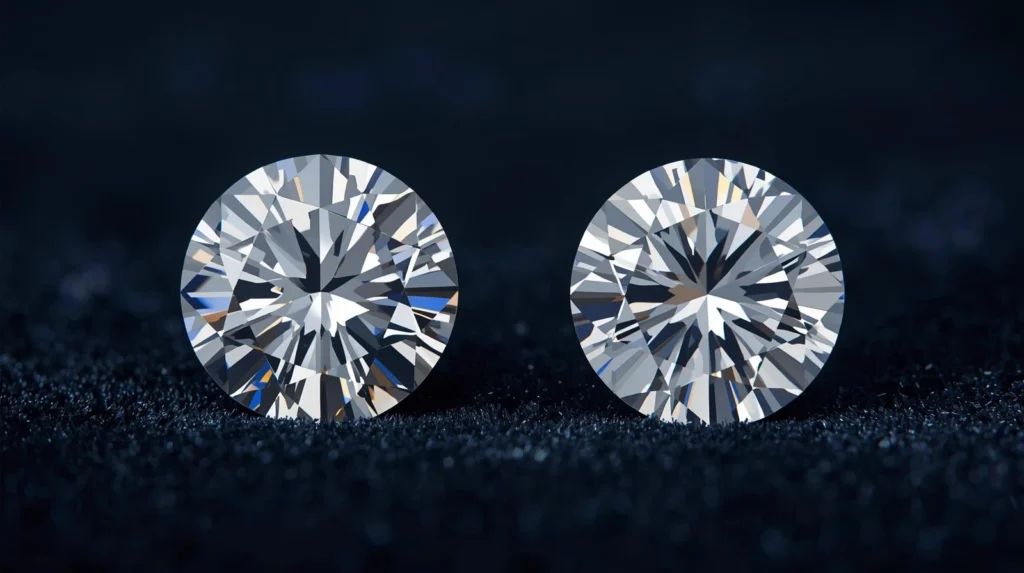
Consider two diamonds: One is 2 carats with a mediocre cut and noticeable inclusions, while the other is 1.5 carats with an excellent cut, near-colorless color, and no visible inclusions. The smaller diamond may actually be worth 30-40% more, despite having less carat weight. This demonstrates why focusing solely on size is one of the most costly diamond buying mistakes.
Expert Insight:
Pro tip: Focus on the cut and overall quality rather than simply aiming for the largest stone. A well-cut diamond myths maximizes brilliance and can make a smaller stone appear larger and more vibrant. This approach saves money while ensuring superior visual appeal.
2. Popular Belief: A Diamond’s Value Is Only Determined by the 4 Cs
We’ve all heard about the 4 Cs, but is that the complete picture? This common misunderstanding oversimplifies the evaluation process and can lead to poor purchasing decisions.
While the Four Cs are undeniably important, they don’t tell the whole story. There are numerous other factors at play, including market demand, diamond origin, cutting technique, certification source, and brand reputation.
The Full Story:
The 4 Cs provide a foundation, but a diamond’s origin (whether it’s natural or lab-grown), the precision of its cutting technique, fluorescence levels, and brand name can dramatically impact value. For example, diamonds from prestigious brands like Tiffany or Cartier often carry a 25-40% premium due to their craftsmanship and brand heritage, even when they have similar technical characteristics to non-branded alternatives.
Case Study:
A customer purchased a 1-carat diamond from a renowned luxury brand, paying nearly $8,000 compared to $5,500 for an equivalent diamond from a non-branded, certified seller. Despite having identical 4 C specifications, the premium was driven largely by brand recognition and the luxury retail experience. Understanding this helps you decide where your priorities lie—brand prestige or optimal value.
Expert Insight:
Pro tip: Always verify that your diamond is certified by a reputable laboratory (such as GIA or AGS) and understand all value factors before purchasing. Brands can offer luxury experiences, but they may not always provide the best value for your specific needs.
3. Widespread Misconception: Lab-Grown Diamonds Are Inferior to Natural Diamonds
Are lab-grown diamonds myths a compromise on quality? This pervasive misunderstanding prevents many buyers from exploring genuinely affordable alternatives that offer identical beauty and durability.
The truth: Lab-grown diamonds are chemically, physically, and optically identical to natural diamonds. They’re not “fake” or “synthetic” in the way many people assume—they’re real diamonds, just created in a controlled laboratory environment rather than formed over millions of years underground.
Why This Belief Hurts Consumers:
Many buyers operate under the false impression that only natural diamonds are “authentic” and that lab-grown alternatives are somehow inferior or less valuable. This simply isn’t accurate. Lab-grown diamonds are created using the same carbon-based crystallization process as natural diamonds, and they exhibit identical physical and chemical properties. The only real difference is origin and price.
Real-Life Example:
A consumer might purchase a 1-carat natural diamond for $6,000, but could acquire a lab-grown diamond with identical size, cut, color, and clarity specifications for approximately $2,000—saving 66% without any compromise on visual appeal or durability. For many buyers, this represents an opportunity to either save significantly or invest in a larger, higher-quality stone for the same budget.
Expert Insight:
Pro tip: Lab-grown diamonds are an excellent choice for those who want genuine diamond beauty at a lower cost, without the environmental and ethical concerns sometimes associated with mining. Always ensure your lab-grown diamond comes with proper certification and that the seller clearly discloses its origin.
4. Industry Misconception: Diamond Myths Are Always the Most Expensive Gemstone
Diamonds are often marketed as the “king of gemstones,” but are they truly always the most expensive option? This common industry belief stems more from successful marketing campaigns than from actual market realities.
The Truth About Gemstone Pricing:
While diamonds are certainly expensive, they are not universally the most costly stones available. Colored gemstones like fine rubies, emeralds, and sapphires—especially those with exceptional color, clarity, and provenance can command significantly higher prices per carat than most diamonds.
Real-Life Example:
A Padparadscha sapphire (a rare peachy-pink variety) can easily surpass $10,000-$15,000 per carat for top-quality specimens, which is substantially more expensive than diamonds of equivalent size and quality. Similarly, exceptional Burmese rubies or Colombian emeralds routinely achieve prices that dwarf comparable diamonds.
Expert Insight:
Pro tip: If you’re open to alternatives, consider other precious gemstones that offer unique aesthetics and potentially better long-term value. Just ensure you understand the specific market for whatever gemstone you choose. High-quality sapphires or rubies can sometimes offer superior investment potential compared to diamonds.
5. Marketing Belief: Diamonds Are Forever And So Is Their Price
Does your diamond’s value increase over time? This persistent marketing narrative, perpetuated by decades of advertising campaigns, leads many consumers to view diamonds as guaranteed financial investments.
However, the resale reality of diamonds can be surprisingly disappointing.
Why This Belief Is Harmful:
While diamond myths certainly hold sentimental value and can last forever physically, they are not guaranteed to appreciate in price. In fact, most diamonds lose significant value immediately upon purchase due to substantial retail markups and the limited secondary market for pre-owned diamonds.
Case Study:
A couple purchased a diamond engagement ring for $15,000 from a luxury retailer, only to discover they could resell it for approximately $5,000-$6,000 (just 33-40% of the original price) a few years later. This value loss occurred despite the diamond being in perfect condition, thanks to the heavy retail markup and the challenges of the secondhand diamond market.
Expert Insight:
Pro tip: If you’re buying a diamond specifically for investment purposes, focus on exceptionally high-quality stones with rare characteristics (like fancy colored diamonds or stones with unique provenance). Otherwise, purchase diamonds primarily for their beauty and emotional significance, not as financial assets.
6. Certification Misconception: You Should Always Buy Based Only on GIA Rating
Is GIA the only certification that matters? This common misunderstanding overlooks other legitimate and reputable grading organizations.
While the Gemological Institute of America (GIA) is indeed the gold standard for diamond grading worldwide, it’s not the only trustworthy certification body. Other organizations like the American Gem Society (AGS) and the International Gemological Institute (IGI) also provide accurate, reliable assessments.
What You Need to Know:
The GIA is highly respected and commands premium prices, but other grading bodies also provide quality certifications with rigorous standards. Some grading systems may emphasize certain factors differently, but they remain reliable. What ultimately matters is the specific grade (cut, color, clarity, carat) and the reputation of the certifying organization, not just whether it bears the GIA name.
Expert Insight:
Pro tip: While GIA certification is excellent and widely recognized, don’t automatically dismiss diamonds certified by AGS or IGI, especially if they offer better value. Compare grading reports from different laboratories to understand the full quality spectrum. Ensure the certification aligns with your specific priorities (such as cut precision or clarity grade)
Conclusion: How to Make Smarter Diamond Buying Decisions
Diamonds myths represent a significant purchase, and avoiding these common diamond myths can save you thousands of dollars while ensuring you get exactly what you want.
Understanding which widespread misconceptions to ignore is crucial for making intelligent, confident purchasing decisions. By focusing on the true value factors—such as cut quality precision, certification reliability, brand considerations, and whether the diamond is natural or lab-grown you can make an informed decision that will leave you satisfied and confident in your investment for years to come.
Key Takeaways to Avoid Common Misconceptions:
Size doesn’t automatically equate to value don’t fall for this popular misbelief; instead, focus on cut quality and overall characteristics
Lab-grown diamonds offer identical quality at a fraction of the price, making them excellent alternatives
Understand the importance of factors beyond the 4 Cs, including origin, certification source, and brand considerations
Resale value is never guaranteed purchase diamonds for their beauty and emotional significance, not primarily as financial investments
FAQ Section
1. Are diamond myths really that rare?
Yes diamond myths are rare, but certain colors and cuts are far more scarce than others. It’s important to focus on quality over quantity when purchasing a diamond.
2. Can you tell the difference between a lab-grown and a natural diamond?
No, lab-grown diamonds and natural diamonds are chemically identical and cannot be distinguished without special equipment.
3. Why do diamond myths lose value after purchase?
Diamonds lose value after purchase due to the high retail markup and lack of a strong secondary market for reselling diamonds.
4. Are colored diamond myths more expensive than clear ones?
Yes, colored diamonds, especially rare colors like pink or blue, are often more expensive than clear diamonds, due to their rarity.
5. What should I prioritize when buying a diamond myths?
Focus on cut quality first, followed by clarity, color, and then carat weight. This will ensure you get a diamond that looks great and holds value.
6. Is it better to buy from a jewelry brand or a non-branded store?
Jewelry brands often add a premium for their craftsmanship, but you may get a better deal by buying from a non-branded store with certified diamond myths.