Introduction
Have you ever found a diamond that looks perfect only to hesitate when you see “fluorescence” on the grading report?
You’re not alone. Many buyers in competitive jewelry markets like Las Vegas second-guess their decision when they encounter diamond fluorescence, unsure whether it’s a hidden flaw or a smart buying opportunity. In fact, industry surveys suggest that over 60% of first-time buyers don’t fully understand fluorescence in diamonds, leading to confusion and missed deals.
This guide breaks down everything you need to know about diamond fluorescence—what it is, how it affects value, and when it can actually work in your favor. By the end, you’ll have a clear, expert-level understanding to confidently choose the right diamond without overpaying or compromising on quality.
What is diamond fluorescence and why does it matter?
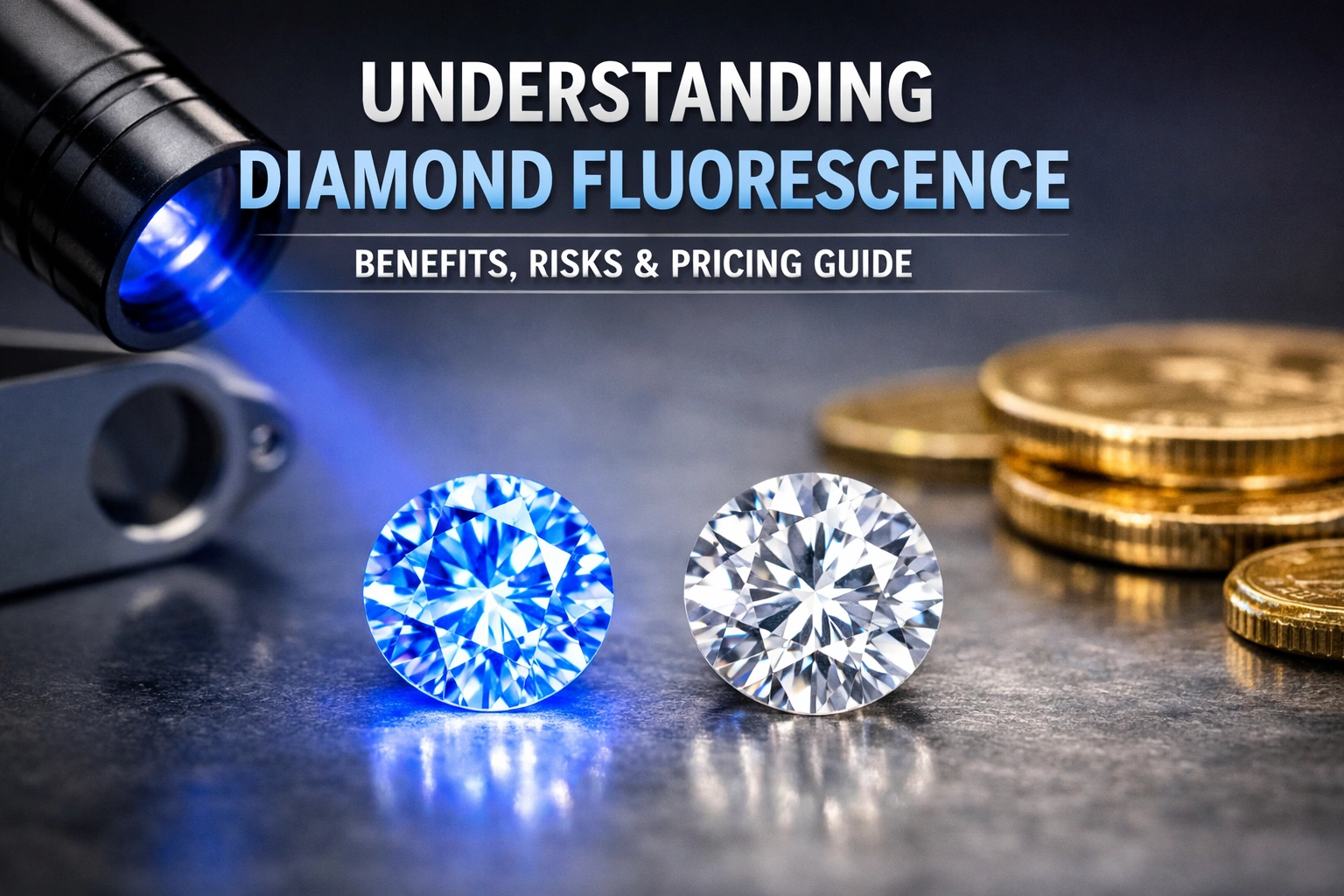
Diamond fluorescence refers to the visible glow some diamonds emit when exposed to ultraviolet (UV) light. Most commonly, this glow appears blue, though other colors like yellow or white can occur.
How fluorescence works
Fluorescence is caused by trace elements within the diamond reacting to UV radiation. Around 25-35% of diamonds exhibit some level of fluorescence, according to gemological studies.
Grading scale
The Gemological Institute of America (GIA) grades diamond fluorescence on a scale:
- None
- Faint
- Medium
- Strong
- Very Strong
Why it matters
Fluorescence can influence both appearance and price. In some cases, it enhances a diamond’s visual appeal. In others, it may create a slightly hazy or milky look.
Real-world example
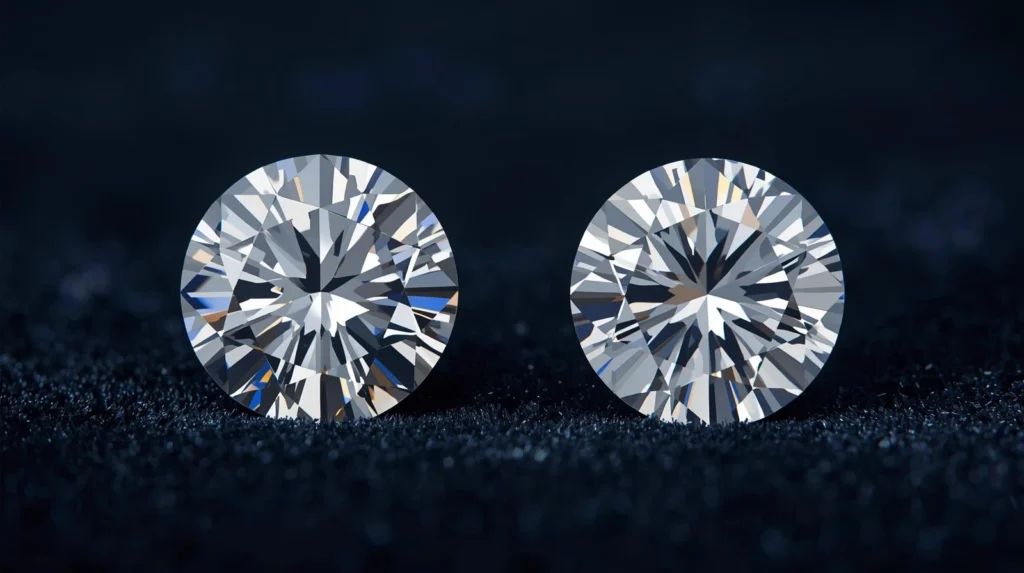
A Las Vegas buyer found two identical diamonds, except one had medium fluorescence and was priced 12% lower. Under natural light, both looked identical—making the fluorescent diamond the smarter purchase.
Actionable takeaway
Don’t dismiss fluorescence immediately. It’s a factor to evaluate—not a dealbreaker.
Does diamond fluorescence affect a diamond’s appearance?
This is the most debated aspect of diamond fluorescence—and where misconceptions often lead to poor decisions.
When fluorescence improves appearance
In diamonds with slight yellow tint (lower color grades like I–K), blue fluorescence can neutralize yellow tones, making the diamond appear whiter.
When it causes issues
In rare cases, strong or very strong fluorescence can create a cloudy or oily appearance, especially in higher color grades (D–F).
Case study
A jewelry retailer in Las Vegas compared two diamonds under sunlight. The one with medium fluorescence appeared brighter and more vibrant, while the non-fluorescent diamond looked slightly dull in comparison.
Expert insight
Gemologists emphasize that only about 2-3% of fluorescent diamonds show negative visual effects.
Pro tip
Always view a diamond in natural light before buying. Store lighting can mask fluorescence effects.
How does diamond fluorescence impact value and pricing?
Diamond fluorescence plays a significant role in pricing—often creating opportunities for savvy buyers.
Pricing trends
- Diamonds with no fluorescence typically command higher prices
- Medium to strong fluorescence can reduce price by 5-15%
- Very strong fluorescence may lead to deeper discounts
Why prices drop
Market perception drives pricing. Many buyers incorrectly associate fluorescence with lower quality, even when it has no visible impact.
Comparison table
| Fluorescence Level | Price Impact | Visual Effect |
|---|---|---|
| None | Highest | Neutral |
| Faint | Minimal | None |
| Medium | Slight discount | Often positive |
| Strong | Moderate discount | Mixed results |
| Very Strong | High discount | Potential haze |
Real-world example
A startup founder purchased a 1-carat diamond with medium fluorescence at a 10% discount, reallocating savings toward a better cut grade—resulting in a more brilliant overall stone.
Actionable takeaway
Use fluorescence strategically to maximize value. It can be a hidden advantage if evaluated correctly.
When should you avoid fluorescence in diamonds?
While diamond fluorescence can be beneficial, there are situations where it’s best avoided.
High-color diamonds (D–F)
In top color grades, fluorescence may reduce the crisp, icy appearance that buyers expect.
Very strong fluorescence cases
These diamonds are more likely to exhibit haziness, especially under daylight conditions.
Luxury investment pieces
For high-end buyers or collectors, resale value matters. Non-fluorescent diamonds are often preferred in premium markets.
Case study
A Las Vegas luxury buyer chose a non-fluorescent D-color diamond to maintain resale value, even though a fluorescent option was cheaper.
Pro tip
If you’re investing in a high-value diamond, prioritize consistency and market preference over short-term savings.
Custom engagement rings, luxury colored gemstones, and diamond creations—crafted in Las Vegas by expert designers with 30+ years of experience. Call us now to make your vision a reality!Your Dream Jewelry, Designed Just for You!
When is fluorescence actually a smart choice?
Here’s where diamond fluorescence becomes a powerful buying advantage.
Mid-range color diamonds (G–J)
Fluorescence can enhance whiteness, giving you a better-looking diamond at a lower price.
Budget-conscious buyers
You can save money without sacrificing visible quality.
Everyday wear jewelry
For daily wear, slight fluorescence differences are rarely noticeable.
Expert insight
Many jewelers quietly recommend medium fluorescence as a “value hack” for informed buyers.
Actionable checklist
- Choose medium fluorescence for best value
- Avoid very strong fluorescence unless inspected in person
- Compare side-by-side with non-fluorescent diamonds
How do you evaluate fluorescence before buying?
Knowing about fluorescence isn’t enough—you need to evaluate it correctly.
Step-by-step evaluation
Step 1: Check the grading report
Look for fluorescence rating on GIA or AGS reports.
Step 2: View under different lighting
Examine the diamond in sunlight, indoor lighting, and UV light.
Step 3: Compare with similar stones
Side-by-side comparison reveals subtle differences.
Step 4: Consult an expert
A trusted jeweler can identify potential issues.
Common mistake
Buying a diamond online without seeing how fluorescence affects its appearance in real conditions.
Pro tip
Ask for videos or live viewing if purchasing remotely.
What are the latest trends in diamond fluorescence (2026–2027)?
Buyer attitudes toward fluorescence are shifting.
Key trends
Increased awareness
More buyers now understand fluorescence, reducing stigma.
Value-driven purchasing
Budget-conscious buyers actively seek fluorescent diamonds for discounts.
Online transparency
Retailers now provide detailed fluorescence data and videos.
Statistics
A 2026 jewelry market report shows that 42% of informed buyers consider fluorescence a positive factor when purchasing diamonds.
Real-world example
Las Vegas jewelers report growing demand for medium fluorescence diamonds among younger professionals seeking value without compromise.
Expert insight
As education improves, fluorescence is transitioning from a “flaw” to a strategic advantage.
How does fluorescence fit into a complete diamond quality guide?
Diamond fluorescence is just one piece of the puzzle.
The 4Cs framework
- Cut: most important for brilliance
- Color: affects appearance
- Clarity: determines imperfections
- Carat: size of the diamond
Where fluorescence fits
Fluorescence interacts mainly with color, sometimes improving or diminishing it.
Internal linking opportunities
To build a complete diamond quality guide, explore:
- diamond cut grading
- diamond color scale
- clarity vs inclusions
- lab-grown vs natural diamonds
- diamond certification basics
Actionable takeaway
Never evaluate fluorescence in isolation. Always consider it alongside the 4Cs.
Call to Action:
Are you ready to find the perfect engagement ring that fits your unique style? Explore our collection of oval and emerald-cut diamonds to discover the one that best suits you.
What Our Clients Are Saying
At DiamondNColors, we take pride in delivering exceptional service and exquisite jewelry. From diamond rings, engagement rings, and bracelets to gemstone pieces and more, our clients’ experiences speak for themselves. Explore our genuine testimonials to see how we bring elegance and quality to every piece, and share your own feedback here.
Conclusion
Diamond fluorescence isn’t a flaw—it’s a misunderstood feature that can either enhance your diamond or help you save money.
You’ve learned how fluorescence in diamonds affects appearance, pricing, and overall value. In many cases, it can actually improve a diamond’s look while lowering its cost—a rare win-win in the jewelry world.
The key is informed decision-making. Evaluate fluorescence based on your priorities, inspect the diamond in real lighting, and balance it with the 4Cs.
Your next step? Compare diamonds with and without fluorescence side by side. Once you see the difference yourself, you’ll make a smarter, more confident purchase.
FAQ Section
1. What is diamond fluorescence in simple terms?
Diamond fluorescence is a glow that appears under UV light. It’s a natural characteristic found in many diamonds and is graded from none to very strong.
2. Does fluorescence in diamonds reduce value?
It can lower market price due to perception, but it doesn’t always reduce visual quality. In some cases, it improves appearance.
3. Is diamond fluorescence good or bad?
It depends. Medium fluorescence can enhance lower-color diamonds, while very strong fluorescence may cause haziness in rare cases.
4. Should I avoid fluorescent diamonds?
Not necessarily. Many fluorescent diamonds offer better value without visible downsides.
5. Can fluorescence make a diamond look cloudy?
Only in rare cases, usually with very strong fluorescence. Most diamonds are unaffected.
6. How common is fluorescence in diamonds?
About 25-35% of diamonds exhibit some level of fluorescence.
7. Is fluorescence visible in normal lighting?
Usually not. It’s most noticeable under UV light, though it can subtly affect appearance in daylight.