Introduction
Have you ever wondered if the “perfect diamond deal” online is too good to be true? A buyer in Las Vegas almost spent thousands on what looked like a flawless diamond—until a simple check revealed it was fake. Knowing how to spot fake diamonds online is essential today to avoid costly mistakes and shop confidently, even in high-demand markets like Las Vegas.
What Is Fake Diamond Identification and Why Does It Matter?
Fake diamond identification is the process of verifying whether a diamond is genuine, lab-grown, or a simulant like cubic zirconia or moissanite. In today’s digital marketplace, this skill is critical.
Online platforms have made diamond buying more accessible—but also more risky. According to a 2025 report by Statista, online jewelry fraud cases increased by over 18% globally, with high-value items like diamonds being the top target.
In Las Vegas, where luxury transactions are frequent, regulations require sellers to clearly disclose whether a diamond is natural, lab-grown, or simulated. However, not all online sellers follow these rules strictly—especially those operating internationally.
Real-world example:
A Nevada-based entrepreneur purchased a “certified diamond” from an overseas website. The certificate turned out to be fake, and the stone was moissanite. The lack of proper verification cost both time and money.
The takeaway? If you don’t understand how to spot fake diamonds, you’re relying entirely on seller honesty—which is a risk you don’t want to take.
How Can You Spot Fake Diamonds Online Without Seeing Them Physically?
This is one of the biggest challenges buyers face.
When shopping online, you don’t have the luxury of holding the diamond. That’s why you must rely on digital verification signals.
Key indicators to check:
Certification authenticity
Always verify grading reports from reputable labs like GIA or AGS. Cross-check certificate numbers on official databases.
High-resolution images and videos
Legitimate sellers provide 360-degree videos and magnified images. If visuals are blurry or limited, that’s a red flag.
Detailed product descriptions
Look for specifics: cut, clarity, carat, color, and fluorescence. Vague listings often hide fake or low-quality stones.
Return policy and guarantees
Las Vegas-compliant sellers typically offer transparent return policies. No return policy? Walk away.
Pro tip:
If a deal feels rushed or “limited-time only,” pause. Scammers rely on urgency to bypass your judgment.
What Are the Most Common Fake Diamonds You Should Watch Out For?
Understanding what you’re dealing with is half the battle.
Cubic zirconia (CZ)
The most common diamond simulant. It looks similar but lacks the brilliance and hardness of a real diamond.
Moissanite
Closer to real diamonds in appearance but has a different sparkle pattern (more rainbow-like reflections).
Glass or synthetic stones
Cheap and easy to detect, but still used in scams targeting beginners.
Case study:
A startup founder purchased a “premium diamond ring” for branding purposes. Upon inspection, it turned out to be cubic zirconia—worth a fraction of the price.
Key insight:
Knowing how to spot fake diamonds means recognizing these substitutes instantly—even from product descriptions.
How Do Certification and Lab Reports Help in Fake Diamond Identification?
Certification is your strongest defense.
Reputable diamonds come with grading reports from recognized labs. These reports include precise measurements and characteristics that are nearly impossible to fake convincingly.
What to verify:
- Certificate number (check on official lab website)
- Laser inscription on the diamond (if visible in images)
- Matching details between listing and report
Statistic:
According to the Gemological Institute of America, over 95% of authentic high-value diamonds are sold with verified certification.
Las Vegas regulations emphasize transparency in diamond sales. Sellers must disclose treatments and origins clearly. If a report seems altered or missing, consider it a major warning sign.
Expert insight:
Always treat certification as a starting point—not the final proof. Fake certificates exist, so verification is key.
What Pricing Signals Reveal a Fake Diamond?
Let’s be direct: price tells a story.
If a diamond is significantly cheaper than market averages, there’s usually a reason—and it’s rarely a good one.
Red flags in pricing:
- Huge discounts (50%+ below market value)
- “Wholesale” claims without proof
- No explanation for price differences
Real-world example:
A buyer in Las Vegas found a 2-carat diamond listed at half the typical market rate. It turned out to be a lab-created stone misrepresented as natural.
How to evaluate price properly:
- Compare across multiple trusted platforms
- Understand average pricing trends for similar specs
- Be skeptical of “too good to be true” deals
Pro tip:
Legitimate sellers justify pricing with certification, brand reputation, and detailed specs. Scammers rely on excitement and urgency.
Your Dream Jewelry, Designed Just for You!
Custom engagement rings, luxury colored gemstones, and diamond creations—crafted in Las Vegas by expert designers with 30+ years of experience. Call us now to make your vision a reality!
(702) 773-1747What Are the Best Diamond Buying Tips for Online Shoppers?
If you want to master fake diamond identification, you need a strategy—not guesswork.
Actionable diamond buying tips:
Always verify the seller
Check reviews, business registration, and physical location (especially important for Las Vegas-based sellers).
Use secure payment methods
Avoid wire transfers or untraceable payments. Use platforms that offer buyer protection.
Request additional proof
Ask for live video verification or additional images. Legitimate sellers won’t hesitate.
Understand return and refund policies
Make sure you have a clear path if the product doesn’t meet expectations.
Check compliance with Las Vegas regulations
Ensure the seller clearly discloses whether the diamond is natural, lab-grown, or simulated.
Case study:
A marketing manager avoided a scam by requesting a live video of the diamond under different lighting conditions. The seller refused—saving the buyer from a costly mistake.
How Do Las Vegas Rules and Regulations Protect Diamond Buyers?
Las Vegas operates under strict consumer protection laws, especially for high-value goods like diamonds.
Key protections:
- Mandatory disclosure of diamond origin
- Clear labeling of lab-grown vs natural diamonds
- Consumer rights for returns and refunds
These regulations are designed to protect buyers—but they only apply if you’re dealing with compliant sellers.
Important note:
Many online sellers operate outside U.S. jurisdiction. That’s why verifying seller location and compliance is critical.
Expert insight:
When in doubt, choose sellers with a physical presence in Las Vegas or the U.S. This adds an extra layer of accountability.
What Tools and Techniques Can Help You Verify Diamonds Online?
Technology has made fake diamond identification easier than ever.
Useful tools:
Diamond verification apps
Some platforms allow you to scan certificates and verify authenticity instantly.
Online databases
Use official lab websites to cross-check certification numbers.
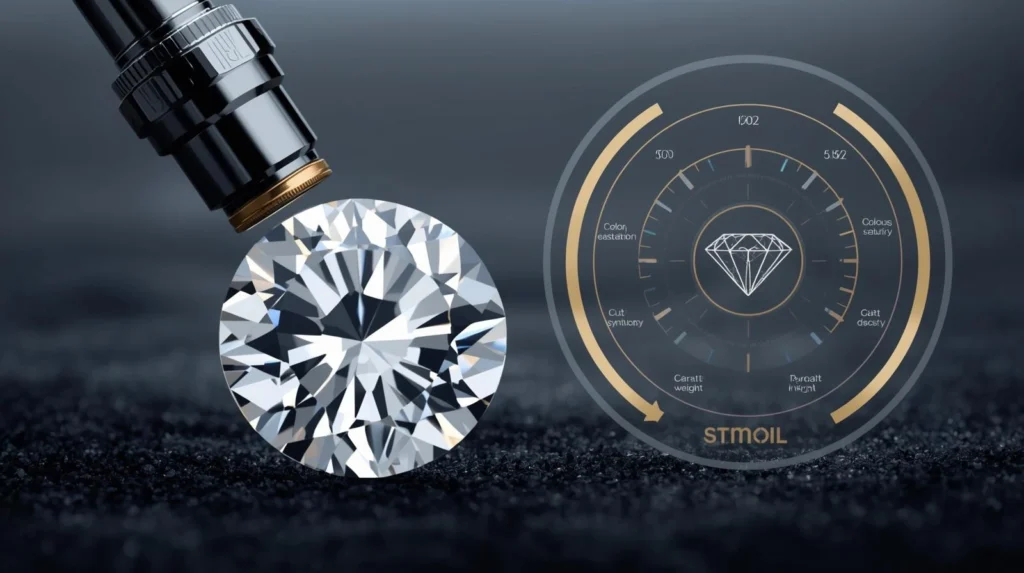
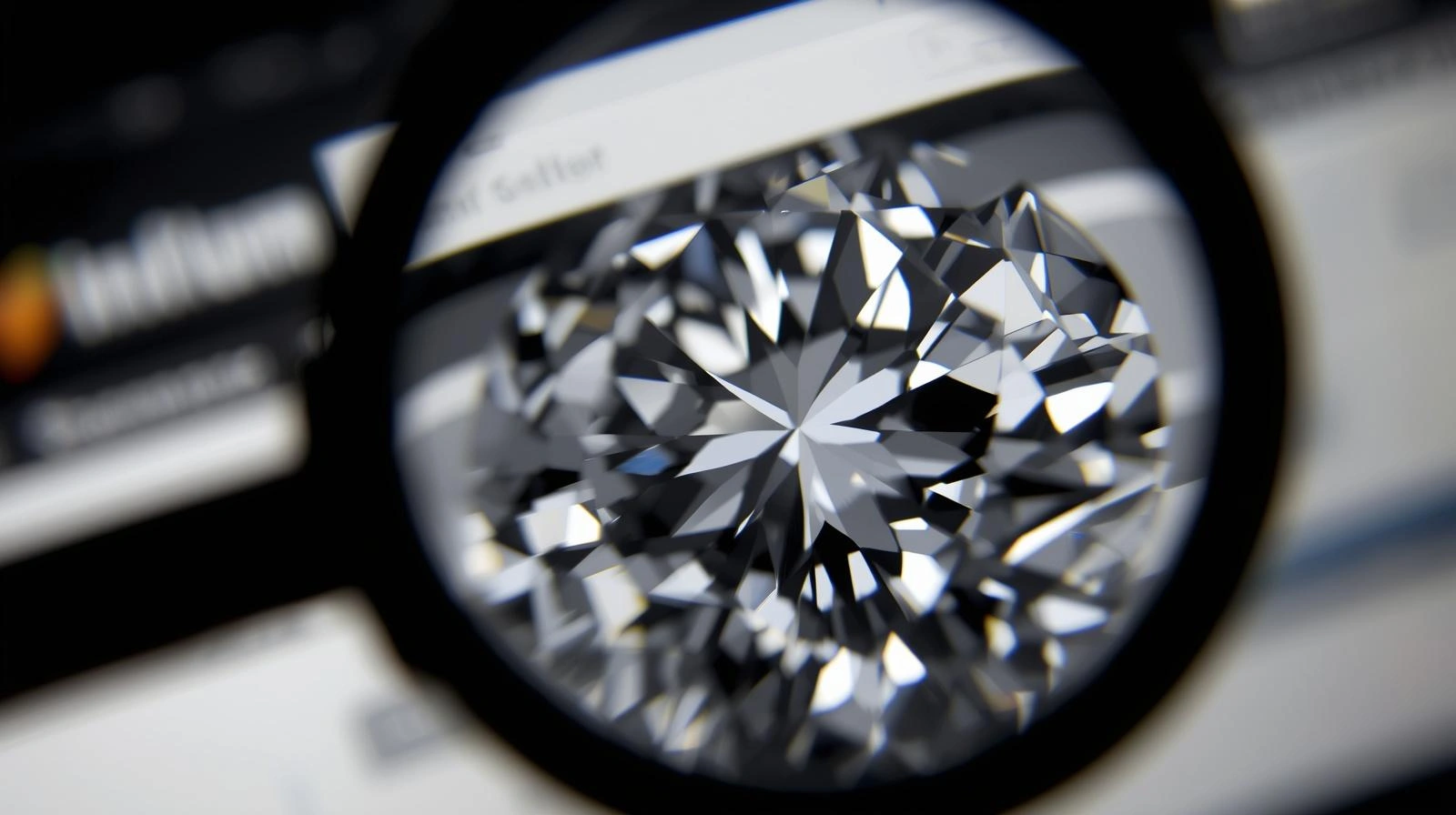
Magnification analysis
High-resolution images can reveal flaws or inconsistencies typical of fake stones.
AI-powered image analysis (2026 trend)
New tools analyze diamond images to detect inconsistencies in cut and reflection patterns.
Pro tip:
Combine multiple methods. Never rely on a single verification step.
Comparison Checklist: Real vs Fake Diamonds Online
| Feature | Real Diamond | Fake Diamond |
| Certification | Verified by GIA/AGS | Missing or fake |
| Price | Market-aligned | Too cheap |
| Sparkle | White brilliance | Rainbow or dull |
| Seller Transparency | High | Low |
| Return Policy | Clear | अस्पष्ट or none |
Use this checklist every time you shop online.
Call to Action:
Are you ready to find the perfect engagement ring that fits your unique style? Explore our collection of oval and emerald-cut diamonds to discover the one that best suits you.
What Our Clients Are Saying
At DiamondNColors, we take pride in delivering exceptional service and exquisite jewelry. From diamond rings, engagement rings, and bracelets to gemstone pieces and more, our clients’ experiences speak for themselves. Explore our genuine testimonials to see how we bring elegance and quality to every piece, and share your own feedback here.
Conclusion
Fake diamond identification isn’t optional anymore—it’s essential.
You’ve learned how to spot fake diamonds, evaluate certifications, analyze pricing, and apply proven diamond buying tips. More importantly, you now understand how to protect yourself in a fast-moving online market like Las Vegas.
Here’s your next step:
Before making any purchase, run through the checklist, verify the certification, and question anything that feels off.
Smart buyers don’t just look for beauty—they look for proof.
FAQ Section
1. How can I quickly perform fake diamond identification online?
Start by checking certification, seller credibility, and pricing. Use official lab databases to verify reports. If any detail feels inconsistent, investigate further before purchasing.
2. Are lab-grown diamonds considered fake diamonds?
No. Lab-grown diamonds are real diamonds but created in controlled environments. However, sellers must disclose this clearly under Las Vegas regulations.
3. What is the easiest way to spot fake diamonds?
Look at the price and certification. If the price is unusually low and certification is missing or unverifiable, it’s likely fake.
4. Can fake diamonds come with certificates?
Yes, scammers sometimes create fake certificates. Always verify certificate numbers on official lab websites to ensure authenticity.
5. What are the safest platforms for buying diamonds online?
Choose platforms with verified sellers, strong return policies, and compliance with U.S. regulations. Avoid unknown international sellers without reviews.
6. How often should I use diamond buying tips when shopping?
Every single time. Even experienced buyers follow strict verification steps to avoid scams.
7. Why is fake diamond identification important in Las Vegas?
Las Vegas is a high-value jewelry market. Scammers often target buyers with luxury deals, making verification essential for safe transactions.